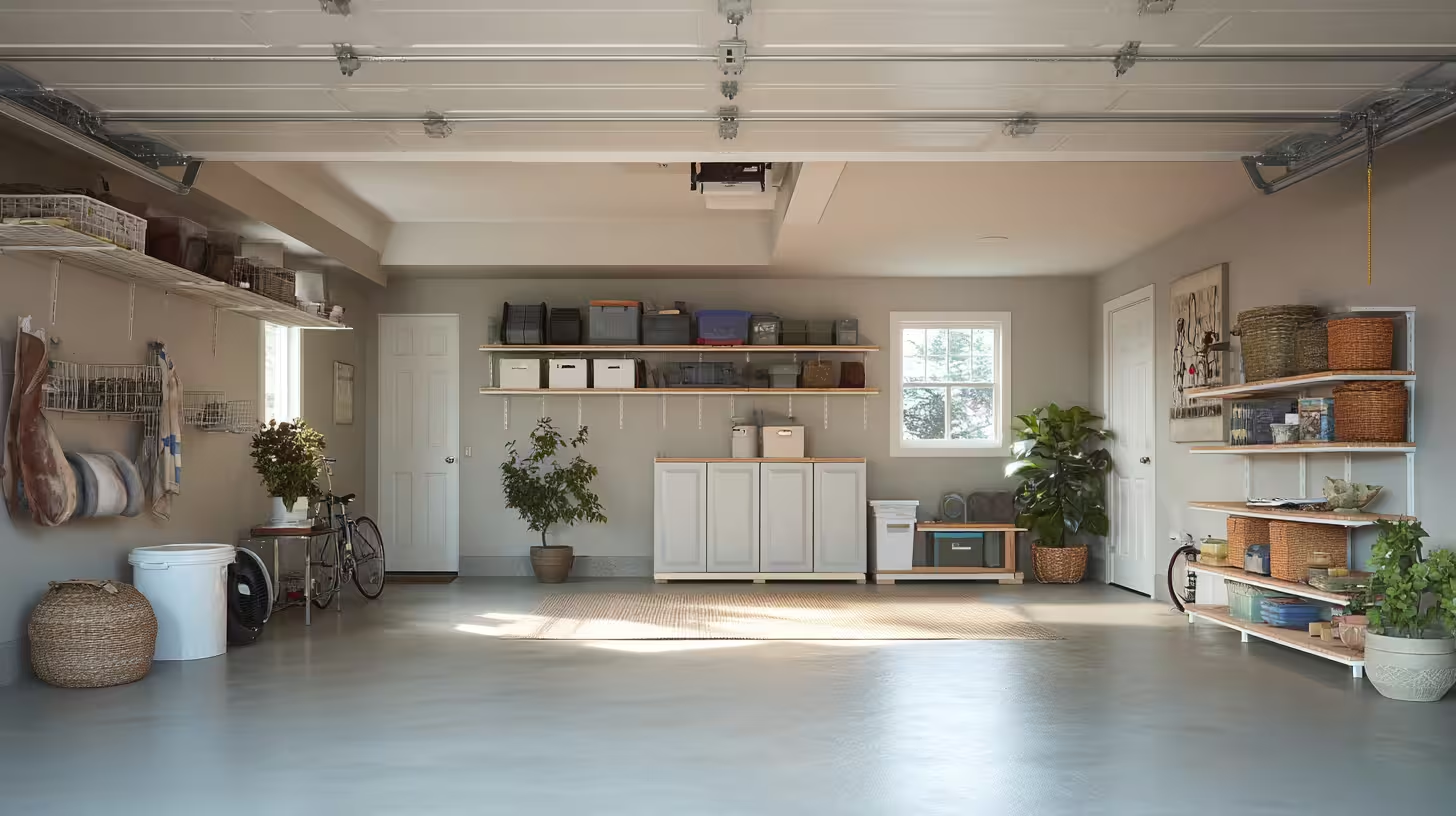
Garages and outdoor areas are often treated as secondary spaces—functional but uninspiring, useful but rarely intentional. Over time, they become storage by default: places where items land temporarily and then stay indefinitely. Yet these spaces hold quiet potential. When approached thoughtfully, they can support daily routines, reduce friction inside the home, and create a smoother transition between indoors and outdoors.
Making better use of the garage, patio, or other outdoor areas does not require a renovation or a dramatic redesign. It begins with clarity—understanding how these spaces could support your life now, not how they were originally intended to be used.
Start by Observing How the Space Is Used Now
Before organizing or adding storage, spend time observing.
Ask yourself:
- When do I enter this space?
- What do I reach for most often?
- What feels inconvenient or cluttered?
Garages and outdoor areas often function as transition zones. You pass through them on the way in and out, carrying groceries, bags, tools, or equipment. If the space doesn’t support these moments, small frustrations accumulate.
Understanding current habits helps you design solutions that last, rather than systems that look good briefly and fail in daily use.
Redefine the Garage as a Multi-Use Space
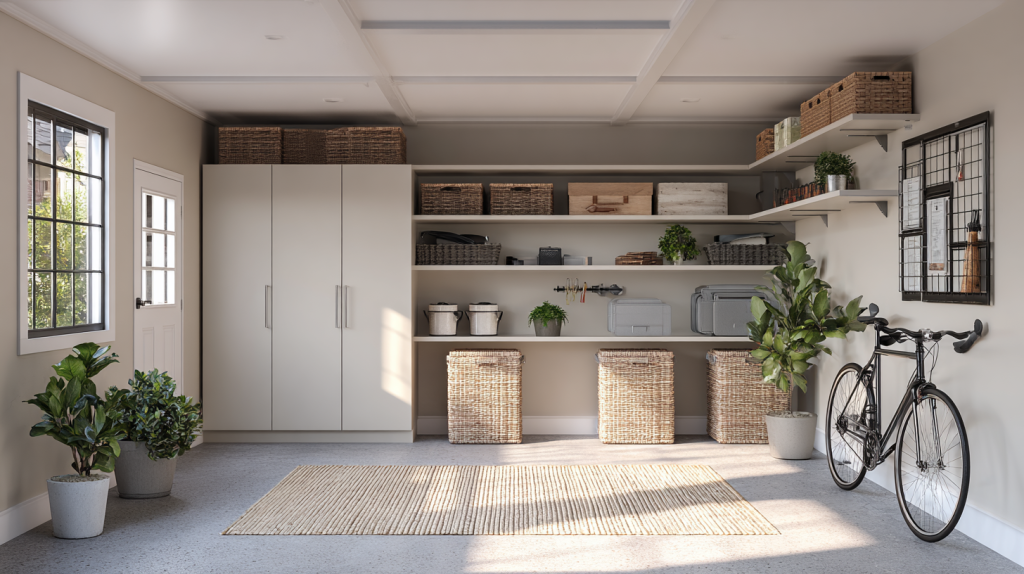
The modern garage no longer needs to serve a single purpose. In many homes, it can function as a flexible support space rather than a static storage room.
Common garage functions include:
- Vehicle parking
- Storage for seasonal items
- Entryway transition zone
- Workshop or hobby area
- Utility space for recycling, tools, or equipment
Trying to force all of these needs into one undefined open area often leads to clutter. Instead, decide which functions matter most now. Priorities can change over time, and the space should be able to adapt.
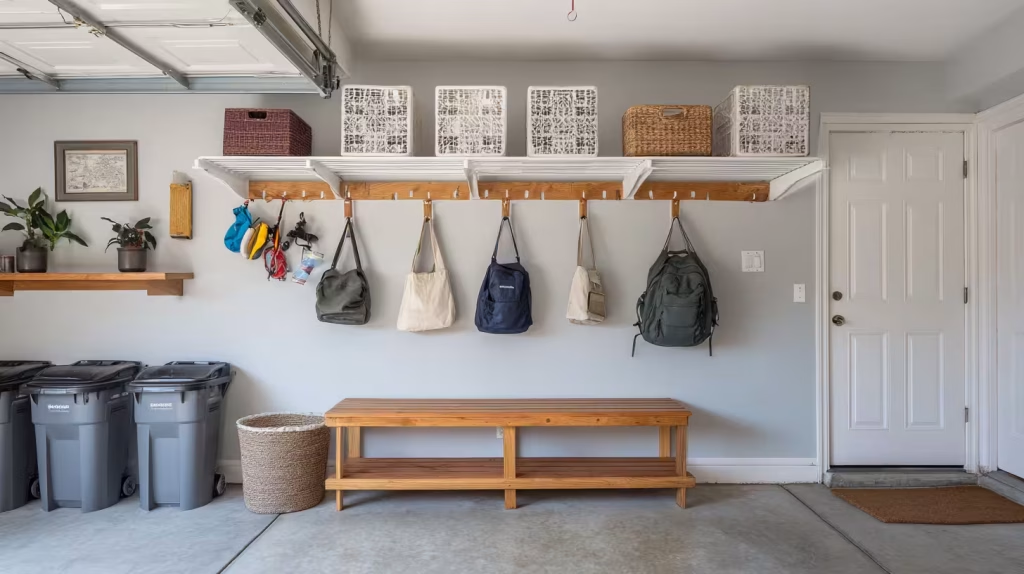
Create Clear Zones to Reduce Visual and Mental Clutter
Zoning is one of the most effective ways to improve usability.
Divide the garage or outdoor space into simple zones based on function:
- Storage zone: shelving, bins, or cabinets
- Movement zone: a clear path for walking or parking
- Activity zone: workspace, bike area, or hobby surface
You don’t need walls or labels. Visual boundaries—such as leaving floor space open, grouping similar items together, or aligning shelving—are often enough.
When garages are used for storage, proper ventilation and safe material placement matter. The Environmental Protection Agency offers guidance on maintaining healthy indoor air quality, even in utility spaces like garages.
Clear zones make it easier to maintain order because every item has a logical place to return to.
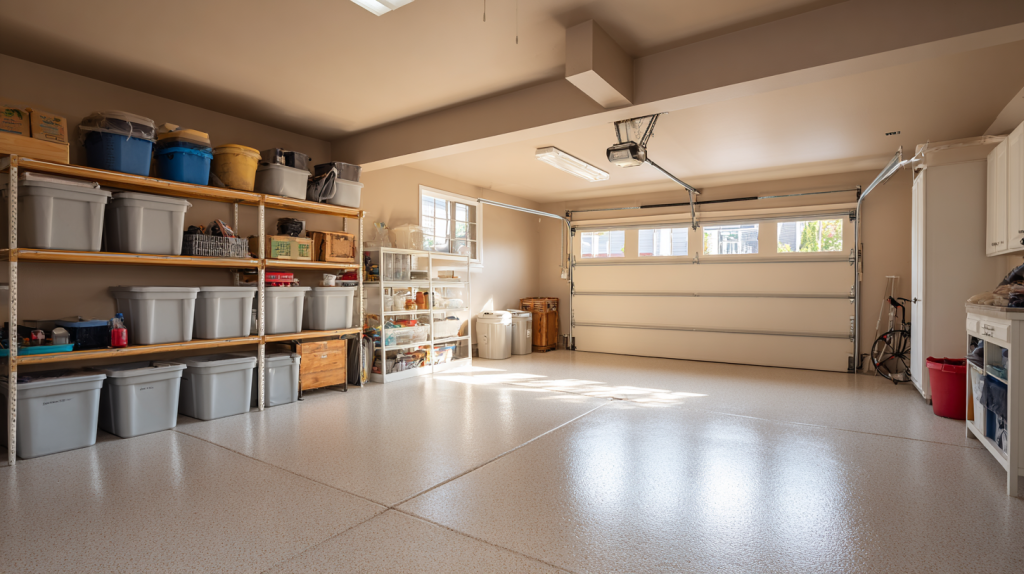
Use Vertical Space Intentionally, Not Excessively
Walls are often underused in garages, but vertical storage should be approached carefully.
Effective vertical storage:
- Keeps frequently used items within easy reach
- Reserves higher areas for rarely used or seasonal items
- Avoids overcrowding walls with mismatched hooks or racks
Use a limited number of systems consistently rather than mixing many different solutions. Visual calm matters, even in utilitarian spaces.
In outdoor areas, vertical space can support planters, tools, or slim shelving without consuming valuable floor area.
Rethink Storage: Fewer Containers, Better Placement
Storage works best when it supports behavior rather than fighting it.
Instead of adding more containers, consider:
- Removing items you no longer use
- Grouping items by frequency, not category
- Choosing containers that fit the space exactly
Clear or neutral containers help reduce visual noise and make contents easy to identify. Labeling can help, but placement matters more. Items should live where they are naturally used.
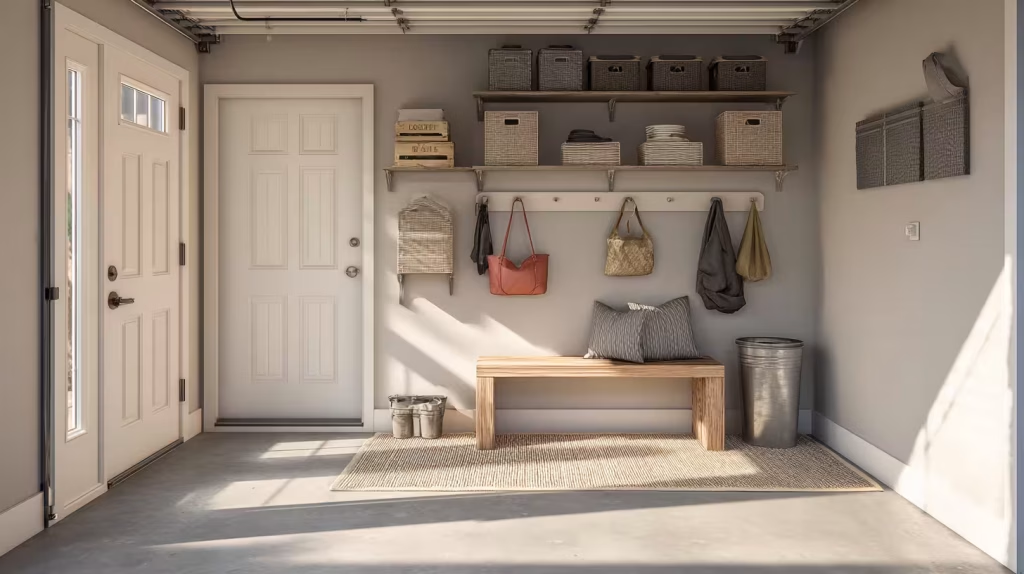
Turn the Garage into a Functional Entry Point
For many homes, the garage is the primary entrance.
If this is the case, it deserves the same consideration as a front entryway.
Simple improvements include:
- A small bench or clear space to set items down
- Hooks for bags, jackets, or keys
- A defined drop zone for daily essentials
These small adjustments can significantly reduce clutter migrating into the main living areas of the home.
Make Outdoor Areas Easy to Use, Not Perfect
Outdoor spaces are often underused because they feel unfinished or overly styled.
Instead of aiming for decoration, focus on accessibility:
- Keep surfaces clear and easy to step onto
- Choose furniture that can stay outside without constant care
- Limit the number of items so setup feels effortless
A simple outdoor chair or table that is always ready to use encourages regular interaction with the space, even for brief moments.

Integrate Small Outdoor Areas Into Daily Routines
Even the smallest outdoor spaces can support everyday life.
A side yard, balcony, or small patio can become:
- A quiet pause during the day
- A place to care for plants
- An extension of indoor living during mild weather
The key is proximity and ease. When outdoor areas feel separate or cluttered, they are visited less often. When they feel like a natural extension of the home, they become part of daily rhythm.
Some outdoor areas work best as transition zones rather than destinations. Covered patios, in particular, can create a calm buffer between indoor and outdoor living when they are designed with everyday routines in mind, as explored in our guide to covered patio ideas that create a calm transition between indoor and outdoor living.
Choose Materials That Tolerate Real Life
Durability matters most in garages and outdoor zones.
Prioritize materials that:
- Handle moisture and dirt
- Require minimal maintenance
- Age without constant attention
Neutral finishes, simple flooring, and practical surfaces help these spaces remain functional over time. When upkeep is easy, the space stays usable rather than becoming a burden.
Improve Lighting to Change How the Space Feels
Lighting is often an afterthought in garages and outdoor areas, yet it has a significant impact. Improving garage lighting doesn’t just enhance usability — it can also reduce energy waste. The U.S. Department of Energy explains how proper lighting choices improve both efficiency and safety in utility spaces.
Consider:
- Multiple light sources instead of a single overhead fixture
- Bright, even lighting for work zones
- Softer lighting near entry points or outdoor seating
A well-lit space feels safer, cleaner, and more inviting—and is far more likely to be used consistently.
Allow the Space to Evolve Over Time
One of the most overlooked principles of good design is flexibility.
Garages and outdoor areas work best when they can change with your needs. Avoid permanent systems that lock the space into one function. Instead, choose solutions that can be adjusted, removed, or repurposed.
Revisit the space periodically. Small adjustments—removing unused items, shifting zones, or improving lighting—can refresh functionality without major effort.
A Practical Shift With Lasting Impact
Making good use of the garage and other outdoor areas rarely results in dramatic visual transformation. Instead, it creates something quieter and more valuable: ease.
When these spaces support daily routines, reduce friction, and remain flexible, they improve how the entire home functions. They no longer feel forgotten or separate, but integrated and intentional.
Sometimes the most meaningful changes happen not in the rooms we showcase, but in the spaces that quietly support everyday life.
At Palette of Thought, the goal is not to maximize every inch, but to create spaces that support everyday routines in a calm, intentional way — an approach reflected across the site’s interior design guides.