The kitchen counter is one of the hardest surfaces in a home to get right. Leave too much out and it feels cluttered. Clear everything away and it feels cold and unlived in. The sweet spot — a counter that looks considered without looking staged — is less about how much you own and more about what you choose to keep visible.
Curated kitchen counter styling isn’t about buying new things. It’s about looking at what you already use every day and deciding which of those things deserve to be seen. A cast iron pot, a stand mixer in the right color, a small tray of morning coffee tools — these aren’t clutter. They’re the kitchen telling its own story.
The Philosophy Behind Curated Kitchen Counter Styling
A well-styled counter begins with thoughtful selection rather than strict minimalism. The goal is not to remove every appliance but to highlight tools that are both functional and beautiful. When designing a curated counter, consider the following principles:
- Display tools you use regularly
- Choose cohesive materials and color tones
- Limit visual clutter by selecting high-quality essentials
- Treat appliances as part of your kitchen decor
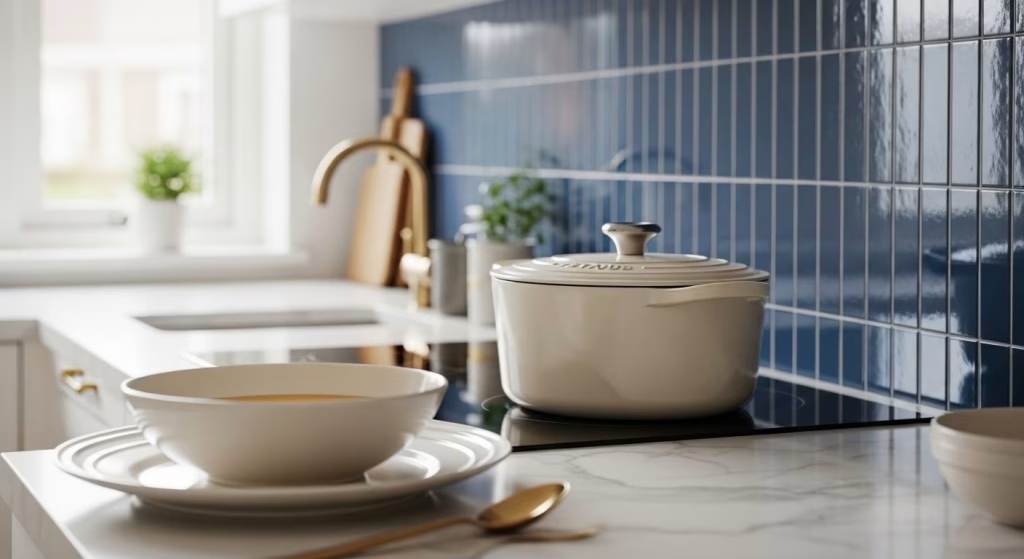
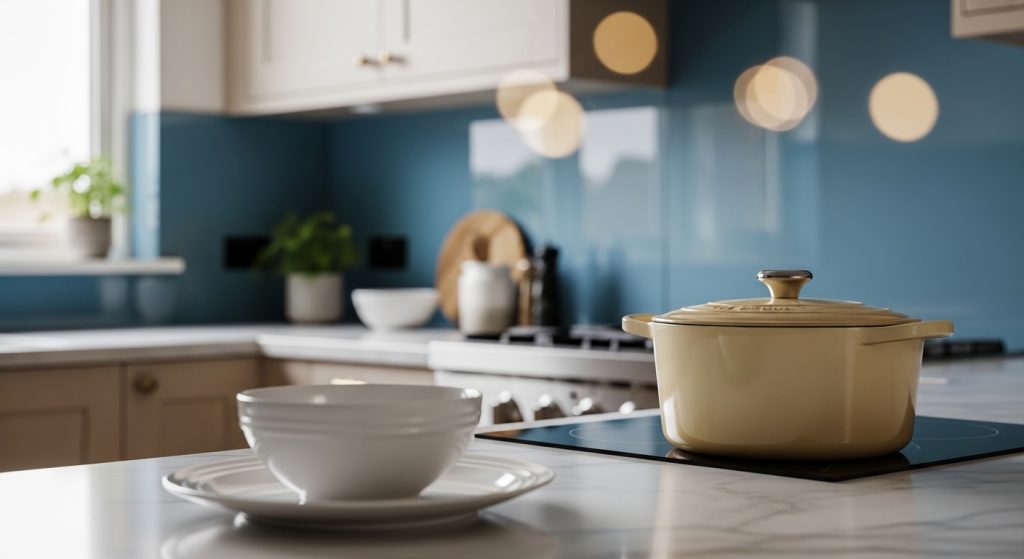
The difference between a cluttered counter and a curated one often comes down to a single well-chosen piece. Not every pot belongs on the counter, but a well-made cast iron piece earns its place.
A Staub cocotte in a deep color — slate, cherry, or graphite — adds the kind of visual weight that anchors a counter without overwhelming it. More importantly, it’s the kind of pot you actually reach for constantly: for braises, soups, slow-cooked grains, anything that benefits from even heat and a lid that seals properly. When a tool is that useful and that considered in its design, storing it feels like the wrong choice.
By selecting items that combine function and style, your kitchen counter can feel intentional, inviting, and beautifully balanced.
The Statement Appliance That Anchors the Counter
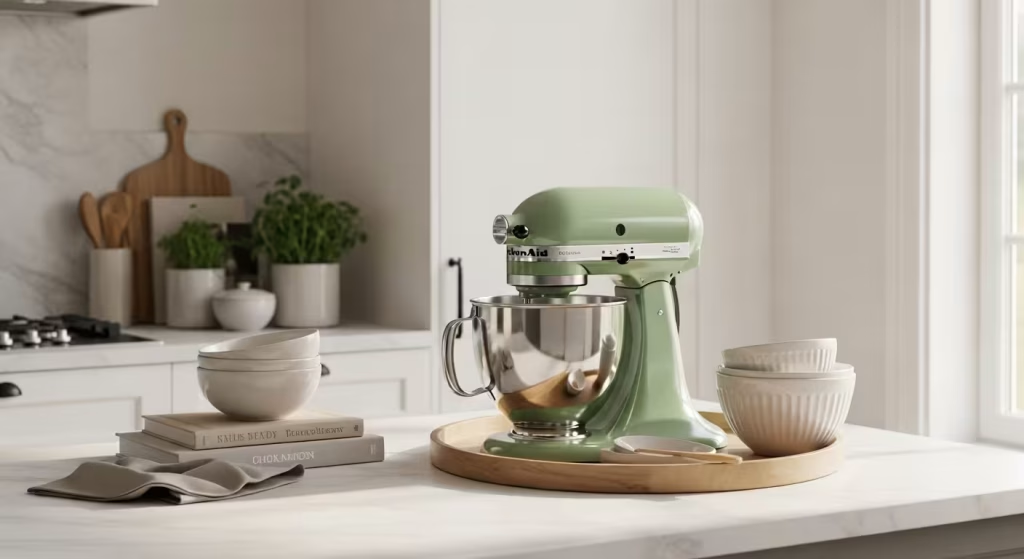
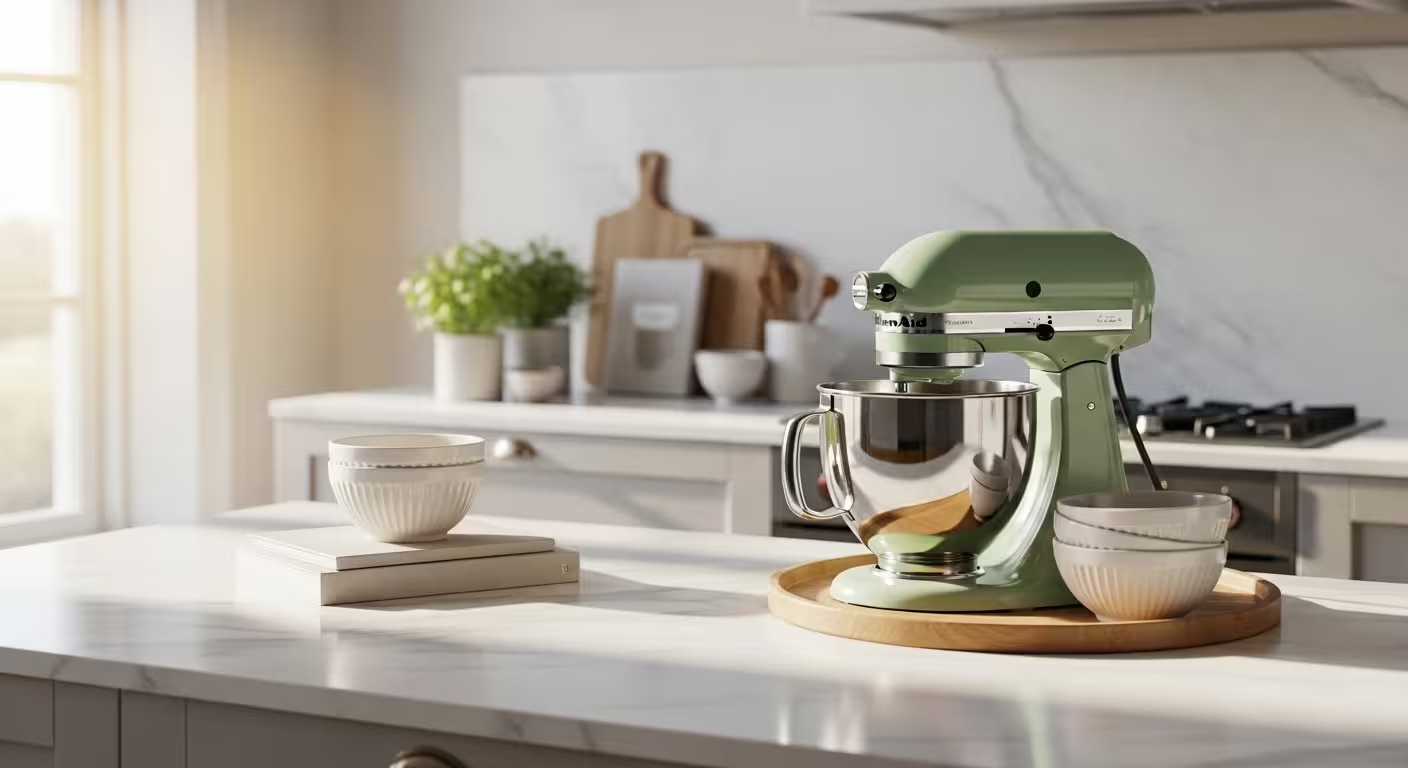
A KitchenAid stand mixer is one of the few appliances that genuinely improves a counter rather than just occupying it. The sculptural shape does visual work even when it’s not in use, and KitchenAid’s color range — from muted sage and dusty rose to classic cream and matte black — means there’s usually a version that fits naturally into whatever palette your kitchen already has. The trick is treating the color choice as seriously as you’d treat a paint decision. Get it right and the mixer becomes the counter’s focal point. Get it wrong and it fights everything around it.
Place it near your prep or baking zone, set it on a wooden board to ground it visually, and resist the urge to surround it with too many other things. A stand mixer styled with breathing room looks intentional. Crowded, it just looks like a busy counter.
By treating the stand mixer as part of the design rather than an appliance to hide, the counter begins to feel curated and intentional.
Small Appliances That Support Daily Kitchen Rituals
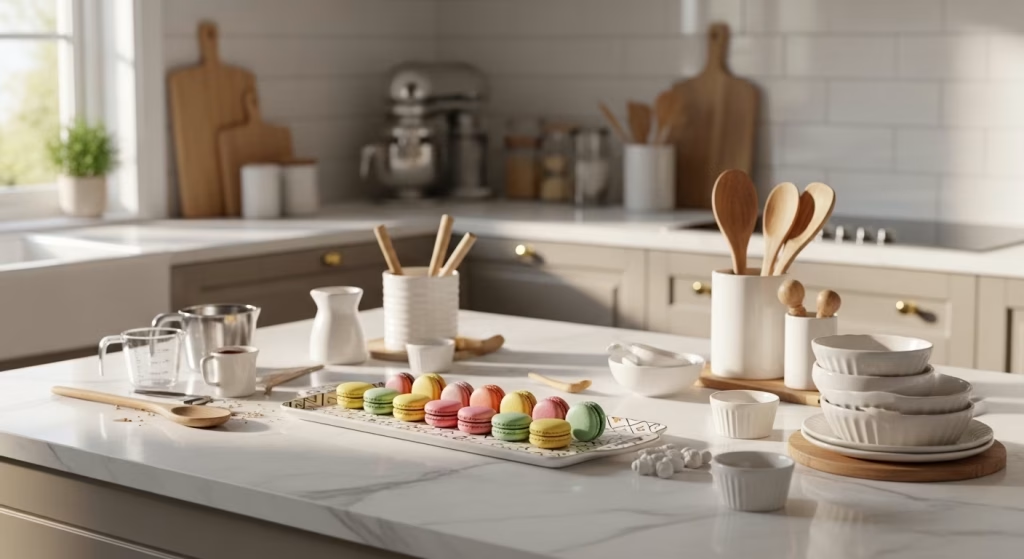
A dedicated beverage station is one of the most effective ways to bring both order and warmth to a counter. Grouping an espresso machine, electric kettle, or coffee grinder onto a single tray immediately transforms a scattered collection of appliances into a considered zone. Add a small jar for coffee beans or loose leaf tea, a ceramic mug set or two, and a wooden spoon — and the corner of your counter becomes somewhere you actually want to stand for a few minutes in the morning. The tray does most of the work: it contains the grouping visually and makes the whole thing easy to wipe down.
Smart Kitchen Tools That Blend Quietly Into the Space
Smart home technology has become increasingly common in modern kitchens. However, curated kitchen counter styling encourages selecting technology that supports daily life without overwhelming the visual environment.
Examples of subtle smart kitchen tools include:
- Smart coffee makers with scheduling features
- Digital kitchen scales with minimal design
- App-controlled air fryers with sleek finishes
- Voice assistant integrations that streamline cooking tasks
When choosing smart appliances, consider both usability and design. Appliances that feature clean lines, neutral colors, and compact shapes tend to integrate more naturally into thoughtfully styled kitchens.
How to Curate Your Own Kitchen Counter
Creating a balanced kitchen counter does not require a complete redesign. Instead, it involves refining what you already use daily.
Step 1: Identify Your Essential Tools
Start by selecting appliances you reach for frequently. Items used weekly or daily deserve priority placement, while rarely used tools can be stored elsewhere.
Step 2: Choose a Cohesive Color Story
Counters appear calmer when appliances share similar tones or complementary accent colors. Soft whites, warm woods, muted pastels, and matte finishes often create the most harmonious visual effect. Pair your functional appliances with thoughtful accents—our post on Color Palettes for Home Accessories: How to Mix & Match for a Cohesive Look has tips for balancing tones and textures.
Step 3: Create Functional Zones
Dividing the counter into small working zones improves both workflow and styling. Consider separating areas for:
- Baking preparation
- Beverage making
- Quick meal assembly
Step 4: Use Decorative Anchors
Decorative elements help unify appliances while preventing the counter from feeling overly mechanical. Anchors such as trays, small plants, or cookbooks introduce warmth and balance.
Seasonal Counter Styling Ideas
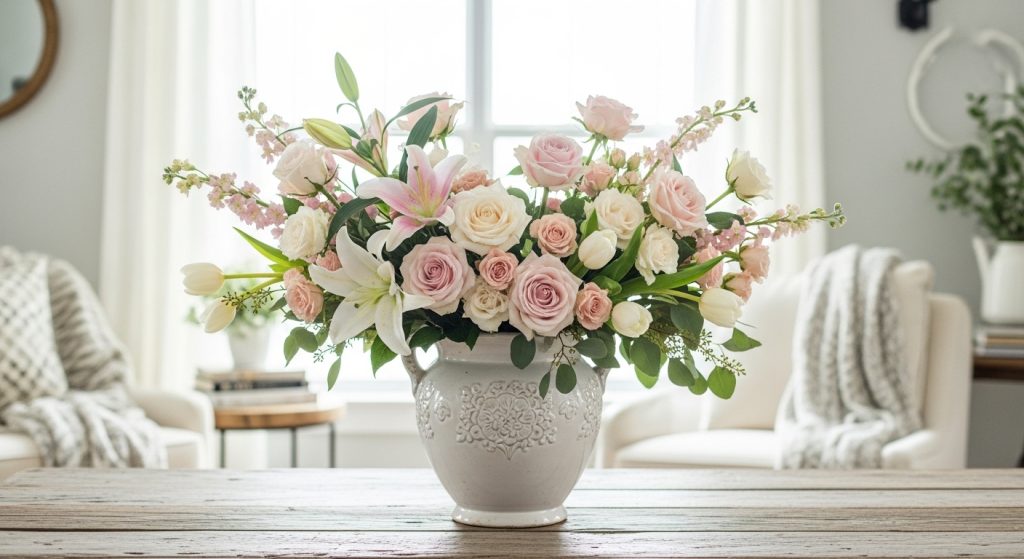
Rotating small styling details seasonally can refresh the kitchen without major changes.
- Spring: Fresh herbs or floral arrangements
- Summer: Citrus bowls or woven trays
- Autumn: Wooden boards and warm ceramic tones
- Winter: Baking tools and cozy cookbook displays
These subtle updates maintain inspiration throughout the year while allowing appliances to remain functional centerpieces.
Looking for ideas to elevate your kitchen counter without clutter? Our Small Accent Pieces That Transform Your Living Room post shows how subtle details make a big impact, which can inspire your kitchen styling too.
Common Kitchen Counter Styling Mistakes to Avoid
Mistake 1
Displaying too many appliances at once
The most common counter styling mistake isn’t clutter from random objects — it’s too many appliances competing for attention at the same time. Each appliance has a visual weight. When five or six sit side by side, the eye doesn’t know where to rest and the counter feels busy regardless of how clean each individual item is.
Fix: aim for one statement appliance per zone. Everything else either earns its place through daily use or gets stored. If you reach for it less than three times a week, it doesn’t need to live on the counter.
Mistake 2
Mixing conflicting finishes without intention
A matte black toaster next to a chrome kettle next to a cream stand mixer next to a stainless steel blender creates visual noise that’s hard to diagnose but impossible to ignore. Each finish pulls attention in a different direction. The counter looks assembled rather than curated — even if every individual piece is beautiful on its own.
Fix: choose one dominant finish and one accent. Warm metals and cream tones work together. Matte black and brushed steel work together. Mixing all four does not.
Mistake 3
Ignoring workflow when styling
A counter styled purely for aesthetics without considering how you actually cook quickly becomes frustrating. If your coffee maker is tucked behind your stand mixer and you use it every morning, you’ll move things constantly — and the carefully styled counter will dissolve within a week of real life.
Fix: style around your actual routine first. The most-used items get the most accessible positions. Beauty follows function, not the other way around.
Mistake 4
Buying trendy appliances to fill the space
Styling guides and social media make it tempting to add a vintage-look toaster or an aesthetic olive oil dispenser because they photograph well. But appliances and tools you don’t genuinely use become expensive clutter within months. A counter styled around your real habits is always more coherent than one built around an aspirational version of your kitchen life.
Fix: before adding anything new to your counter, ask whether you’d reach for it daily. If the honest answer is no, it belongs somewhere else.
Creating a Kitchen That Reflects Daily Living
A thoughtfully styled kitchen counter encourages a slower, more intentional cooking experience. By selecting appliances that are both useful and visually appealing, everyday routines become easier and more enjoyable.
Curated kitchen counter styling reminds us that practical tools can contribute to the overall atmosphere of a home. When functionality and design are balanced, even small kitchen moments can feel purposeful and calm.
Mistake 5
Skipping the decorative anchor
A counter full of appliances — even beautiful, well-chosen ones — still needs at least one non-functional element to feel warm rather than utilitarian. Without a small plant, a cookbook, a wooden board, or a ceramic bowl, the counter reads as a collection of machines rather than a designed space. The anchor is what makes it feel like someone lives there intentionally.
Fix: add one organic or decorative element per zone — something with texture, warmth, or natural form. It doesn’t need to be expensive. A small herb pot or a stack of two cookbooks is enough.
Frequently asked questions about kitchen counter styling
What should I keep on my kitchen counter? Only what you use at least three times a week. For most people that means a coffee maker or kettle, one or two prep tools, and a statement appliance like a stand mixer or blender if you bake or cook regularly. Everything else — the juicer you use monthly, the air fryer you reach for occasionally — is better stored and brought out when needed.
How do I make my kitchen counter look less cluttered without removing everything? Start by grouping what you have into zones rather than spreading appliances across the full counter length. A tray or wooden board containing your coffee tools immediately makes that cluster look intentional rather than scattered. Then assess each remaining item individually — if it doesn’t belong to a zone and doesn’t earn its place visually, store it.
What colors work best for kitchen counter appliances? Soft neutrals — cream, warm white, matte black, sage green, and brushed brass — tend to work across the widest range of kitchen styles. The key isn’t finding the perfect color but choosing appliances that share a finish family. Two or three pieces in coordinating tones always look more curated than five pieces in five different finishes.
Do I need to match my appliances to my cabinets? Not exactly, but they should relate. If your cabinets are warm white, cream or sage appliances feel natural. If your cabinets are dark or charcoal, matte black or brushed steel works well. The relationship doesn’t need to be a match — it needs to feel considered rather than accidental.
How often should I restyle my kitchen counter? Seasonally is a natural rhythm — small swaps like replacing a citrus bowl with a wooden board in autumn, or adding fresh herbs in spring, keep the counter feeling alive without requiring a full redesign. The appliances stay constant; the decorative anchors shift gently with the season.
Affiliate Disclosure
Some of the links on Palette of Thought are affiliate links. This means that if you click a link and make a purchase, we may earn a small commission at no extra cost to you. All opinions and recommendations are our own, and we only share products and items that we genuinely love and believe will be helpful for our readers.