Productivity isn’t about squeezing more tasks into an already full day. It’s about designing your routines so progress happens naturally, without constant pressure or burnout. That’s where daily habit upgrades come in.
Daily habit upgrades don’t require dramatic life changes or extreme discipline. Small, intentional adjustments to your everyday routines can quietly transform how focused, productive, and consistent you feel.
Rather than chasing motivation or copying extreme routines, daily habit upgrades focus on improving the small behaviors you repeat every day. These subtle changes may feel insignificant at first, but over time they compound into better focus, higher energy, and more consistent results.
If you’ve ever felt busy but unfulfilled, organized but unfocused, this approach is for you. Let’s explore how upgrading your habits — not overhauling your life — can lead to sustainable productivity.
Why Daily Habit Upgrades Work Better Than Big Goals
Big goals are exciting, but they rely heavily on motivation. Habits, on the other hand, rely on systems. And systems are far more reliable. Our daily routines shape how we think, focus, and respond long before we consciously try to be productive.
Daily habit upgrades work because they:
- Reduce decision fatigue
- Lower the barrier to starting
- Turn effort into automation
- Build momentum through repetition
Instead of asking, “How can I be more productive today?” a more useful question is:
“What habit can I slightly improve so productivity becomes easier tomorrow?”
This shift moves productivity from willpower to design — a far more sustainable place. Research on habit formation, popularized by James Clear, shows that small, consistent behavior changes are more effective than relying on motivation alone.
Morning Habit Upgrades That Create Focus All Day
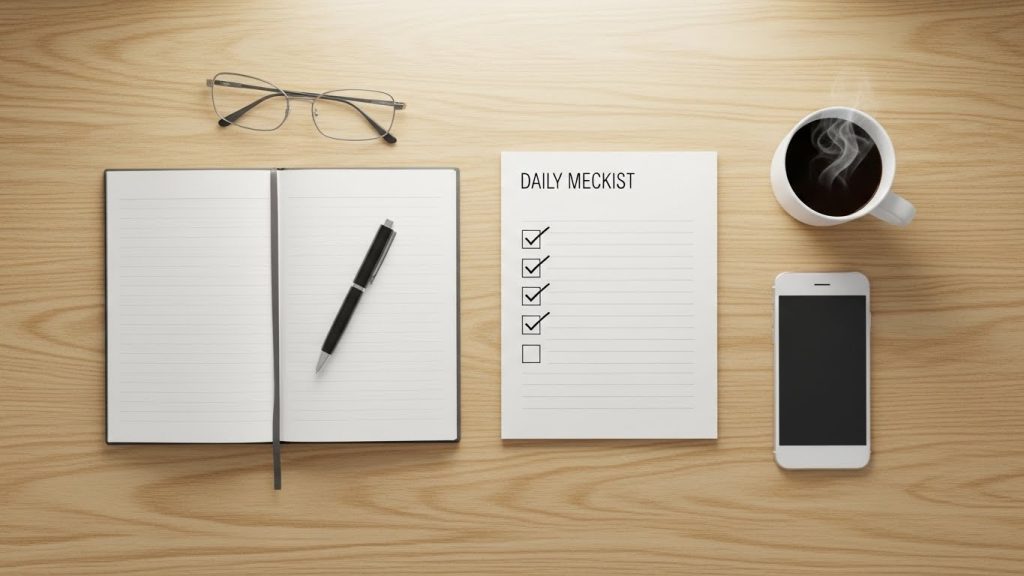
How you start your day quietly shapes how you think, focus, and react for hours afterward. The goal of a productive morning isn’t perfection — it’s direction.
Start With Clarity, Not Stimulation
One of the most effective daily habit upgrades is delaying stimulation and choosing clarity instead. Before checking email or social media, take a few minutes to identify:
- One priority task that truly matters
- One supporting task
- One personal or health-related action
This simple habit anchors your day. Even if everything else goes off track, you still move forward on what matters. Small improvements to daily routines can create meaningful changes in focus, energy, and overall productivity.
Reduce Morning Decisions

Decision fatigue is real, and it starts early. Creating a low-decision morning — similar clothes, simple breakfast, consistent routine — preserves mental energy for meaningful work.
Many people find it helpful to pair this with a lightweight planning or journaling tool. Apps like Notion, Todoist, or Reflection can serve as a single place to capture priorities without overwhelming you.
The goal isn’t complexity. It’s removing friction. Long-term progress depends on repetition, which is why learning how to build habits that last is essential for sustainable productivity.
Just like streamlining your daily habits, keeping your space organized can reduce stress. Explore Home Organization Tips for Small Spaces to make every day feel calmer.
Workday Habit Upgrades That Protect Attention
Most productivity struggles aren’t caused by lack of time, but by fragmented attention. Notifications, multitasking, and constant context switching quietly drain focus. Improving productivity often starts by simplifying daily routines rather than adding more tasks or complicated systems. According to insights shared by Harvard Business Review, reducing decision fatigue and protecting focused work time are key factors in sustained productivity.
Work in Focus Blocks
Instead of working reactively, structure your day around focused work sessions. A common approach is 60–90 minutes of deep work followed by a short break.
During a focus block:
- Silence notifications
- Work on one task only
- Define what “done” looks like before you start
This habit trains your brain to associate certain periods with deep focus. Tools like Forest, Pomofocus, or Freedom are often used to support this by reducing digital distractions. Strong productivity habits reduce the need for constant motivation by creating structure that supports focused work every day.
End the Day With a Shutdown Ritual
A surprisingly powerful daily habit upgrade is how you stop working. The American Psychological Association emphasizes that sleep quality and stress management play a critical role in cognitive performance and daily focus.
A simple shutdown ritual might include:
- Reviewing what you completed
- Writing tomorrow’s top priority
- Closing all work-related tabs and apps
This creates psychological closure. When your brain trusts that work has been captured and planned, it lets go — reducing stress and improving next-day focus.
Energy-Based Habit Upgrades: The Productivity Multiplier

Productivity is often treated as a time problem, but it’s really an energy problem. You can’t think clearly, focus deeply, or work creatively when your energy is depleted.
Daily Movement (Even Light)
You don’t need intense workouts to improve productivity. A short daily walk or light movement improves:
- Cognitive function
- Mood and motivation
- Creativity and problem-solving
This is one of the highest-return daily habit upgrades you can make.
Small changes in your daily environment can make a big difference — even simple upgrades like adjusting your lighting can improve your mood. See our tips on Affordable Lighting Ideas for easy home upgrades.
Protect Sleep Without Obsession
Sleep is foundational, yet often neglected. One practical habit upgrade is creating a consistent “digital sunset” — turning off stimulating screens 30–60 minutes before bed. Over time, productivity habits shape not only how much we accomplish, but how sustainable and balanced our work feels.
Some people use screen-control or focus apps to support this boundary, but even a simple routine works. Productivity improves when your nervous system gets real rest.
How to Make Daily Habit Upgrades Stick
Many habits fail not because they’re bad ideas, but because they’re introduced at the wrong scale. When distractions take over, implementing simple focus strategies for deep work can dramatically improve the quality of your working hours.
Use Habit Stacking
Habit stacking means attaching a new habit to something you already do:
- After brushing your teeth → review your daily priority
- After lunch → take a short walk
- Before closing your laptop → plan tomorrow
This removes the need to “remember” a habit — it becomes automatic. Behavioral research from Stanford University highlights that habits are more likely to stick when they are designed to be small, simple, and easy to repeat.
Track Progress Without Pressure
Tracking habits should feel supportive, not stressful. Simple visibility is enough.
Many people prefer:
- A basic habit tracker
- A weekly check-in instead of daily perfection
- Visual streaks for motivation
Apps like Streaks, Habitica, or Fabulous are popular because they make consistency visible without demanding constant attention.
Missing one day doesn’t matter. Abandoning the system does.
Common Productivity Mistakes to Avoid
As you build daily habit upgrades, watch out for these traps:
- Changing too many habits at once
- Copying someone else’s routine exactly
- Relying on motivation instead of structure
- Measuring productivity by hours worked instead of outcomes
The best productivity system is the one you can maintain on your worst days — not just your best ones. Building effective productivity habits starts with small, repeatable actions rather than ambitious plans that are hard to maintain.
Research on habit formation, popularized by James Clear , shows that small, consistent behavior changes are more effective than relying on motivation alone.
Turning Daily Habits Into Long-Term Identity
The most powerful habit upgrades eventually shift how you see yourself. Simple productivity habits, practiced consistently, can lead to meaningful improvements in focus, efficiency, and clarity.
You’re no longer:
- “Trying to be productive”
- “Trying to stay consistent”
You become someone who:
- Plans before reacting
- Protects focus intentionally
- Designs habits instead of forcing discipline
That identity shift is where lasting productivity lives.
Final Thoughts: Small Upgrades, Lasting Change
Daily habit upgrades don’t demand drastic transformation. They ask for awareness, patience, and consistency.
When you upgrade:
- How you start your day
- How you protect attention
- How you manage energy
- How you close each day
You create a system where productivity becomes a byproduct — not a struggle.
Start small. Stay consistent. Let time compound your effort.
Because real productivity isn’t about doing more.
It’s about building habits that make what matters easier — every single day.
Just like creating a productive daily routine can transform your habits, updating your home with the latest trends can refresh your space — check out our Interior Design Trends 2026 for inspiration.