Walk into a room that’s lit well and you feel it before you can explain it. Walk into one that isn’t — a single overhead bulb washing everything flat, shadows in the wrong corners, a lamp that’s too bright for 9pm — and the room never quite relaxes you, no matter how nice the furniture is.
Good home lighting ideas start with understanding that lighting is the one design element that affects every other. It changes how colors read, how large a room feels, and whether a space invites you to stay or just pass through. The good news is that most homes only need a few intentional changes to get it right — and none of them require a renovation. As Architectural Digest notes in their guide to lighting design fundamentals, the fixtures you choose matter far less than how thoughtfully you layer and place them throughout a space.
This post may contain affiliate links. If you purchase through these links, I may earn a small commission at no additional cost to you. I only share pieces that align with the design vision of Palette of Thought.
Entryway Lighting: Set the tone from the first step
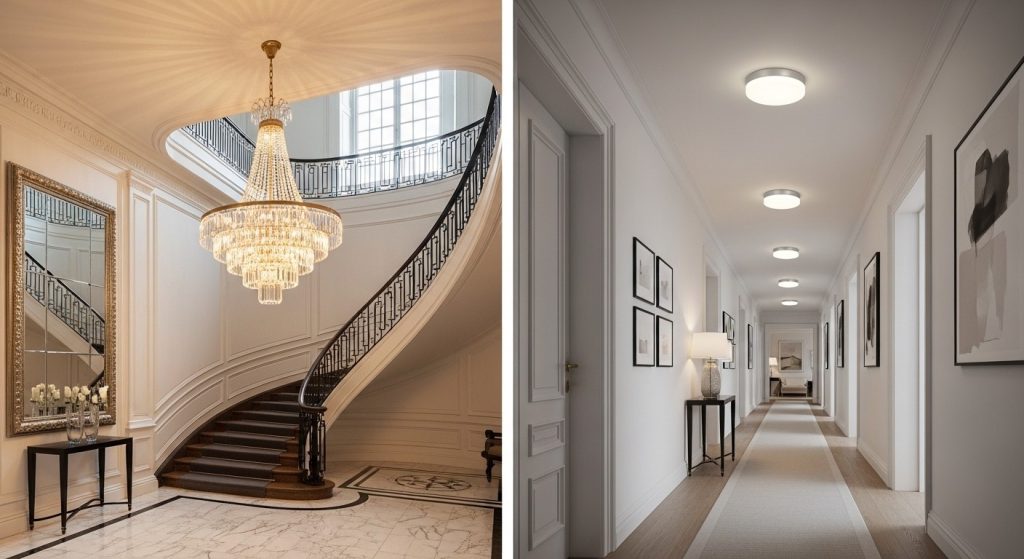
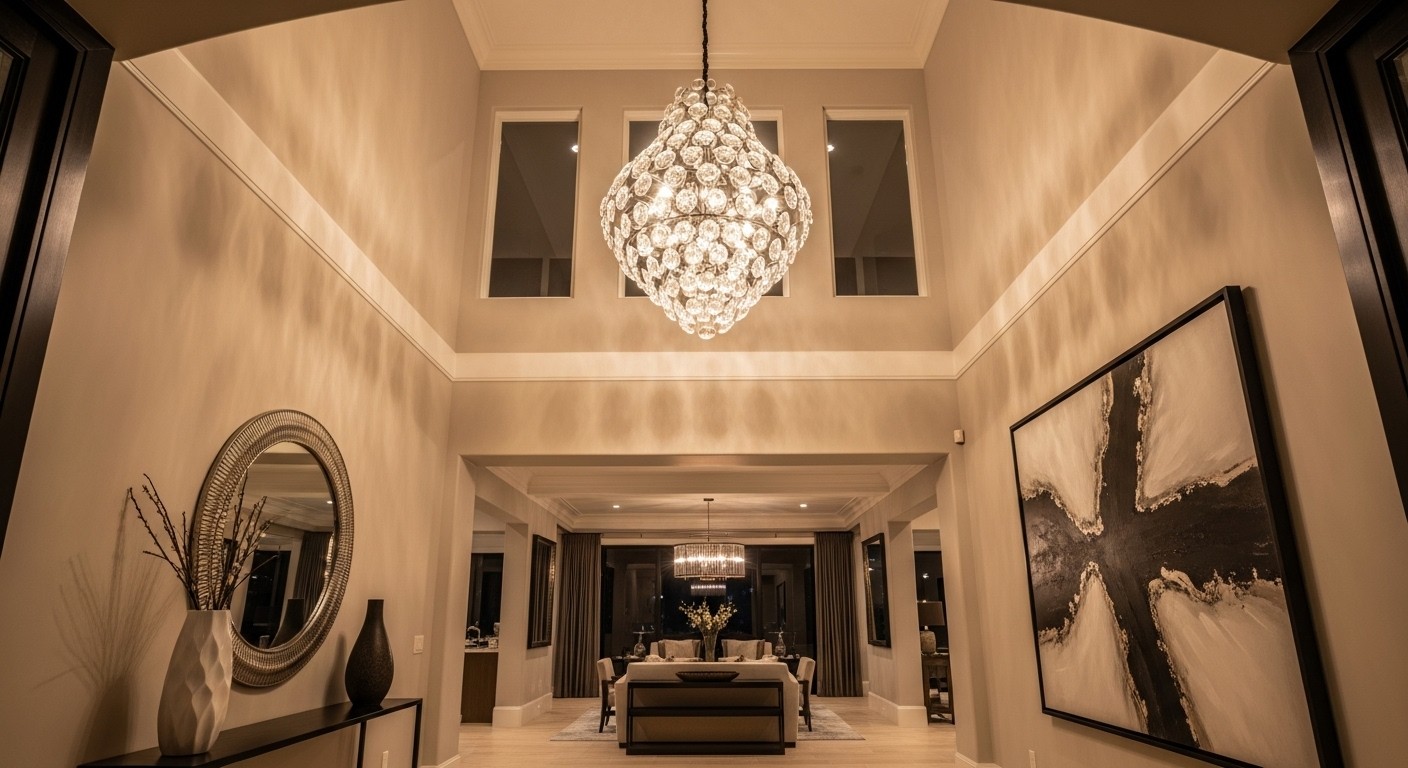
The entryway is the only room in your home that every visitor experiences first — and it’s usually the most underlighted. A single recessed can is rarely enough. In a high-ceiling entry, a pendant or chandelier hung low enough to feel intentional (not floating near the ceiling) immediately signals that the rest of the home is considered. In long, narrow hallways, evenly spaced ceiling fixtures prevent the tunnel effect — aim for one fixture every 6–8 feet rather than relying on a single central light.
Bulb temp: 2700K–3000K. Avoid cool white here — warmth makes a first impression.
Research from the Lighting Research Center at Rensselaer Polytechnic Institute shows that light color temperature directly affects alertness and mood — which is why getting bulb temperature right matters as much as fixture placement.
Why Layered Lighting Matters
One of the most important home lighting ideas is layering. This means combining three essential types of lighting:
- Ambient lighting – overall illumination
- Task lighting – focused lighting for specific activities
- Accent lighting – decorative or highlight lighting
When these three work together, a room feels complete rather than flat.
For example, in a living room, recessed lights may provide ambient brightness, a pendant or chandelier adds style, and a floor lamp creates a cozy reading corner. This layered approach adds warmth and flexibility. Lighting is one of the most powerful levers you have for how a home feels to live in day to day — we explore the full picture in our guide on what makes a home feel calm every day.
Room-by-Room Lighting Tips
Livingroom Lighting Ideas : The room that needs the most layers
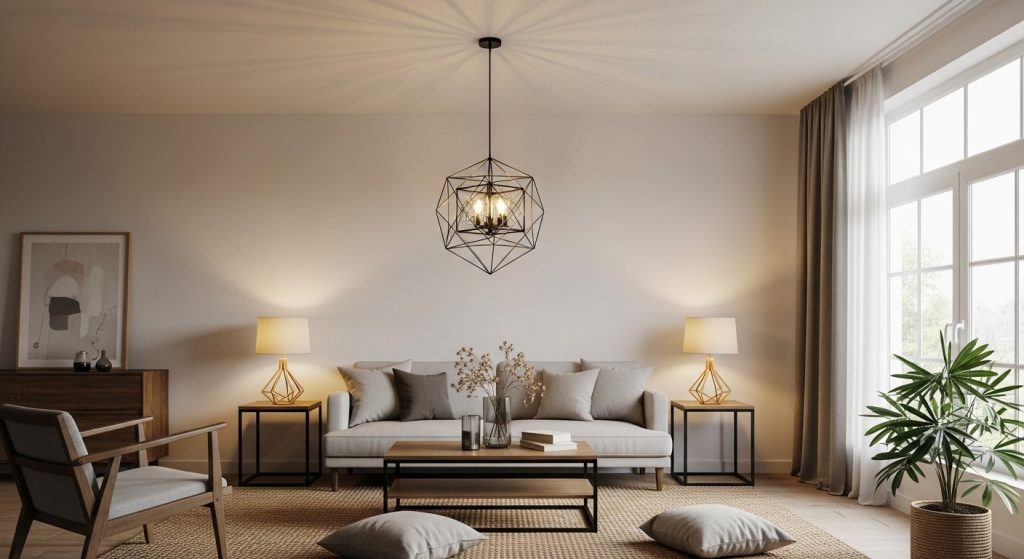
Living rooms serve more different moods than any other space — bright for activity, dim for film, warm for conversation. A single overhead fixture can’t do all of that. The key is building in at least three sources: ambient light from recessed fixtures or a central pendant, task light from a floor or table lamp near seating, and accent light to highlight architectural features or artwork. Dimmers on every circuit make the whole system flexible without adding fixtures.
Bulb temp: 2700K for warmth. Add a dimmer to your main circuit if you do nothing else.
Kitchen Lighting Ideas : Function first, atmosphere second
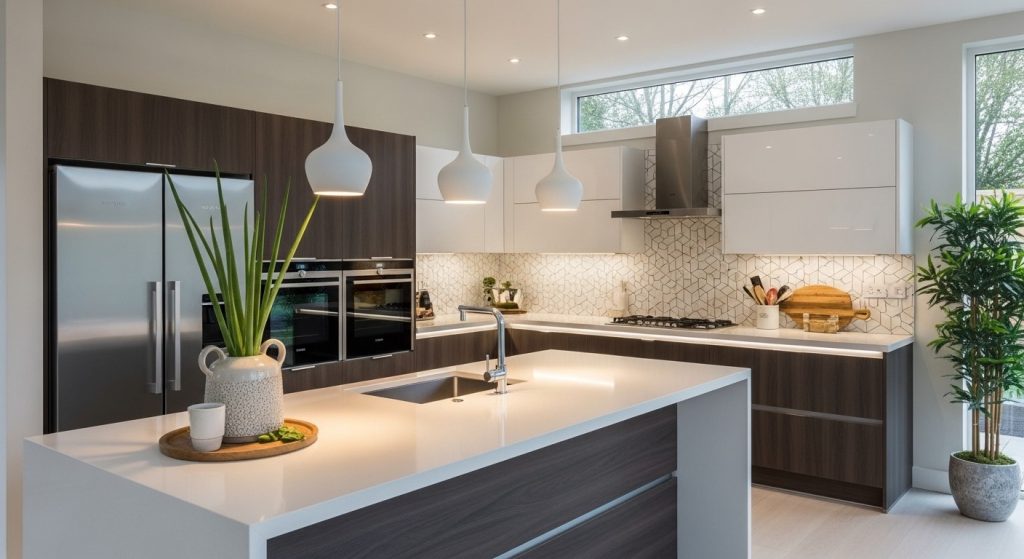
Kitchens need more light than most rooms deliver. The biggest mistake is relying on a single central fixture — it lights the ceiling, not the counters. Under-cabinet lighting solves the most common complaint (shadows while chopping) better than any overhead fixture can. Pendants over an island add personality and task light in the right place, while recessed lights handle ambient fill. Keep these on separate switches so you can run task lighting without flooding the whole room. To ensure perfect balance above your island, read our full guide on Kitchen island lighting ideas for expert sizing and spacing tips.
Bulb temp: 3000K–3500K for task areas. Slightly cooler than living spaces keeps it crisp without feeling clinical.
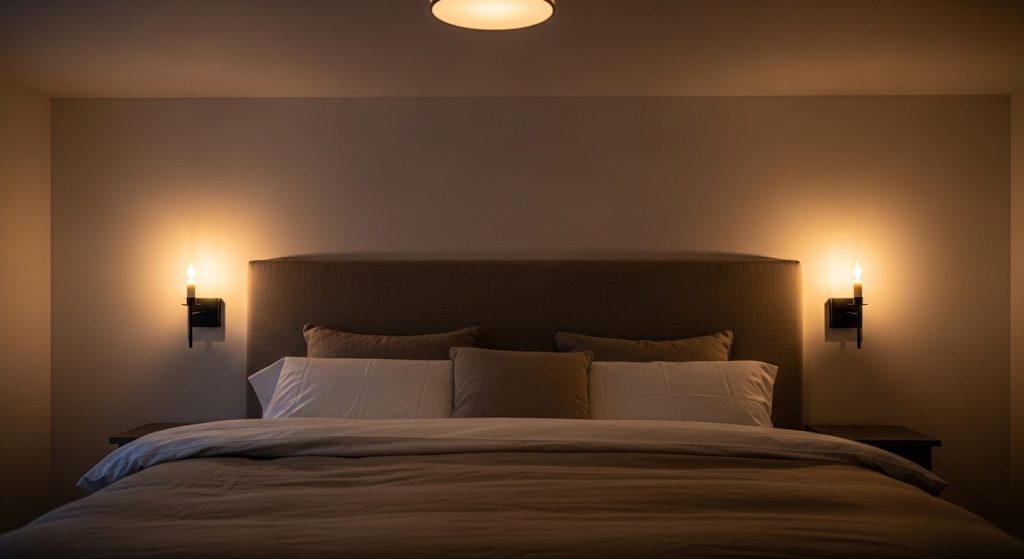
Bedroom: Design for wind-down, not just sleep
The most common bathroom lighting mistake is a single fixture mounted above the mirror — it casts shadows downward across your face, which is the opposite of what you need for grooming. Side-mounted sconces at roughly eye level (about 60–65 inches from the floor) provide even, flattering light with no shadows. If a full reposition isn’t possible, a light bar across the top of the mirror is better than a single central fixture. In larger bathrooms, a separate overhead for ambient light plus mirror-adjacent sconces gives you full control.
Bulb temp: 3000K near mirrors. Warm enough to feel residential, cool enough for accurate grooming.
Bathroom Lighting Ideas: Light the face, not the ceiling
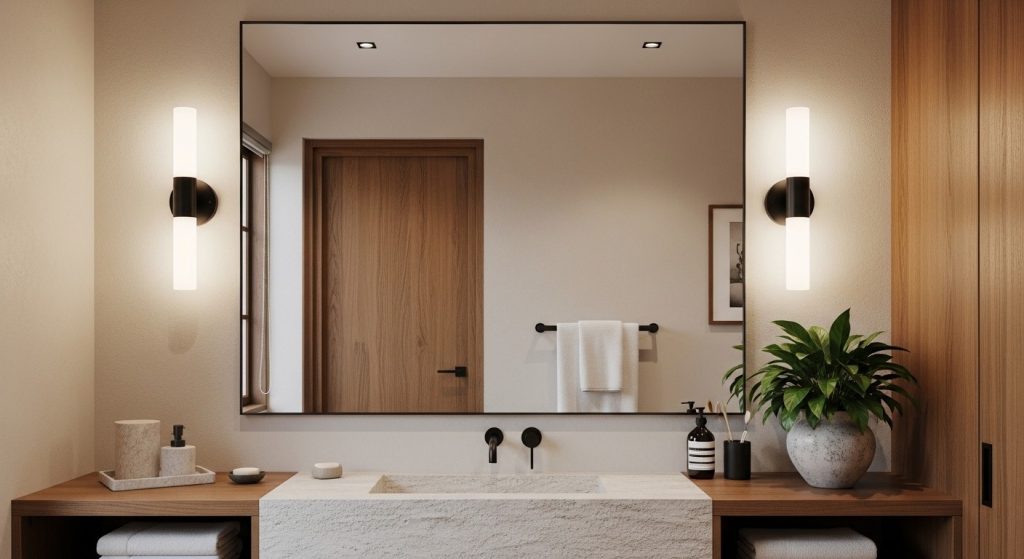
The most common bathroom lighting mistake is a single fixture mounted above the mirror — it casts shadows downward across your face, which is the opposite of what you need for grooming. Side-mounted sconces at roughly eye level (about 60–65 inches from the floor) provide even, flattering light with no shadows. If a full reposition isn’t possible, a light bar across the top of the mirror is better than a single central fixture. In larger bathrooms, a separate overhead for ambient light plus mirror-adjacent sconces gives you full control.
Bulb temp: 3000K near mirrors. Warm enough to feel residential, cool enough for accurate grooming.
Statement Lighting: Add Personality and Style
Lighting can also serve as decorative art. Geometric or sculptural fixtures create visual interest and draw attention to specific areas without overwhelming the space. Small details, like a unique pendant or wall sconce, can make a room feel curated and sophisticated.
For inspiration on using accent lighting throughout your home, visit our post on Accent Lighting Ideas.
Practical Tips for Choosing the Right Fixtures
Style consistency: Choose fixtures that complement your interior style—modern, minimalist, traditional, or eclectic.
Scale and proportion: Large fixtures in small rooms can feel heavy, while tiny lights in large spaces may look lost.
Functionality: Pair ambient light with task and accent lighting for a balanced effect.
Dimmers: Adjust brightness for different times of day or moods.
Scale becomes especially important in smaller rooms, where an oversized fixture can make a space feel cramped rather than cozy. If you’re working with limited square footage throughout your home, our small space living ideas guide covers how to keep every room feeling open and considered.
Frequently asked questions about home lighting
How many light sources does a room actually need? Most rooms benefit from at least three: one ambient source for overall brightness, one task source for functional activities, and one accent or decorative source for warmth and depth. Living rooms and bedrooms often need four or five once you count reading lamps and any accent lighting. The goal is flexibility — different combinations for different times of day.
What’s the easiest lighting upgrade in a home? Adding dimmers. A dimmer switch on your main living room or bedroom circuit costs under $30 and transforms how the room feels in the evening. Most homes are only ever used at full brightness, which is rarely the right mood after 6pm.
Does every room need recessed lighting? No — recessed lighting is one option for ambient light, not a requirement. Floor lamps, pendants, and ceiling fixtures with diffused shades all deliver ambient light without the cost of installation. Recessed lights are most useful in kitchens and hallways where ceiling-mounted fixtures would feel bulky.
Should lighting match throughout the house? Finishes and styles don’t need to be identical room to room, but they should feel related. A home where every room uses a completely different metal finish and fixture style starts to feel incoherent. A loose rule: pick one or two finishes (say, matte black and warm brass) and let those repeat across the home, even if the fixture shapes vary.
Can lighting make a small room feel bigger? Yes — strategically. Uplighting draws the eye upward and makes ceilings feel taller. Avoiding a single central overhead in favor of multiple lower sources around the perimeter makes walls feel further apart. Light-colored lampshades reflect more light into the room than dark ones. None of these replace square footage, but they meaningfully change perception.
Final thoughts on home lighting
Good lighting does more than illuminate — it transforms how a home feels to live in every day. Thoughtful placement, layered sources, and fixtures chosen with proportion and purpose in mind make every room feel more inviting, more considered, and more like you.
The changes that matter most are rarely the biggest ones. A dimmer switch, a better-placed lamp, or a pendant hung at the right height can shift a room entirely. Start with one space, layer intentionally, and the rest of the home tends to follow.