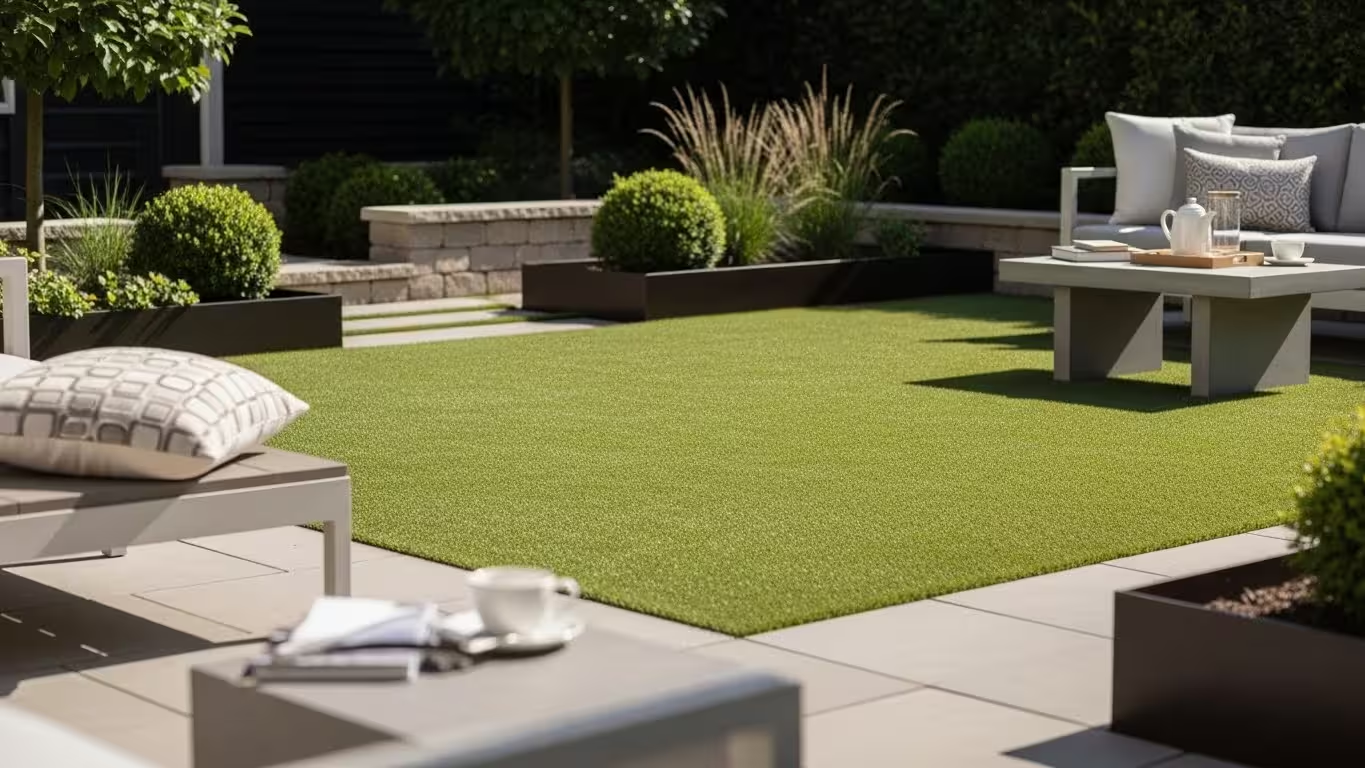
At first glance, artificial turf for your home can seem like a simple decision—pick a green option and install it. But once you start looking closer, you realize there are many variations, each suited to different needs, lifestyles, and outdoor spaces.
This topic may sound narrow, but it reflects a very real moment many homeowners and renters face: wanting a low‑maintenance outdoor area that still feels welcoming and intentional. Choosing the right artificial turf is less about trends and more about how you live. Understanding a few key details makes choosing the right artificial turf much easier, especially when the goal is a space that feels natural, comfortable, and easy to maintain.
1. Start With How You’ll Actually Use the Space When Choosing the Right Artificial Turf
Before comparing turf samples, ask one honest question: What will this area be used for most of the time?
- A calm garden view from indoors
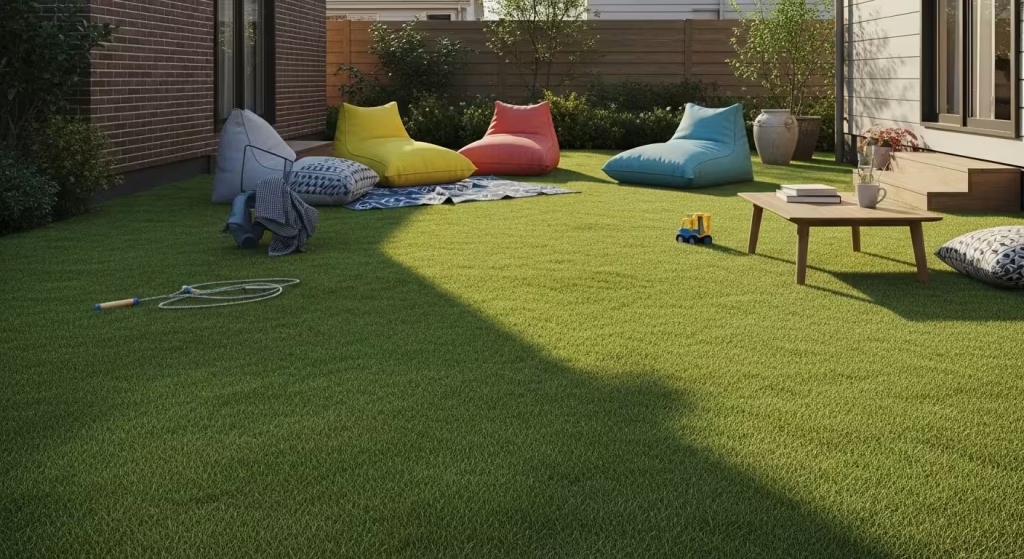
- A play area for children
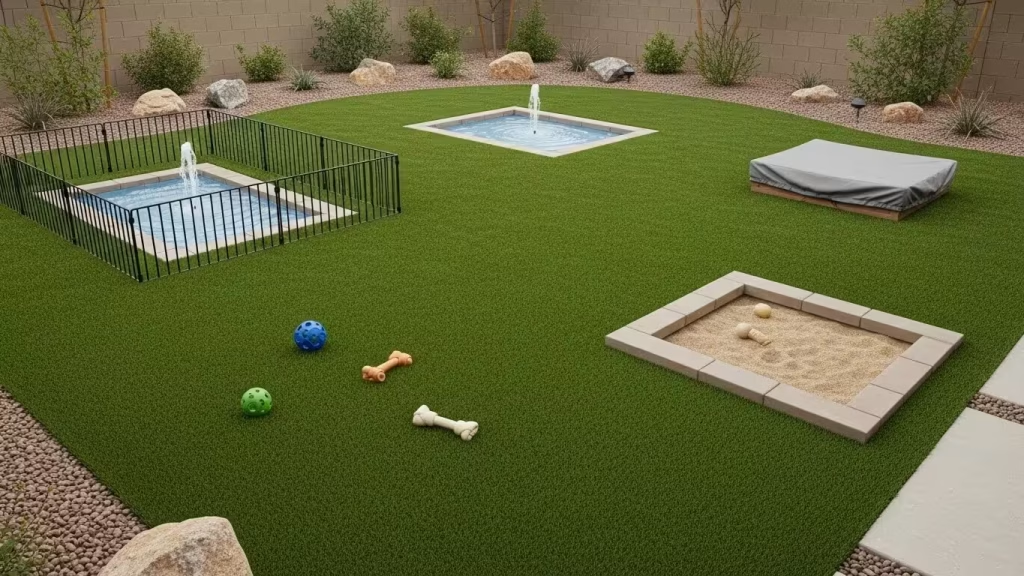
- A pet‑friendly yard
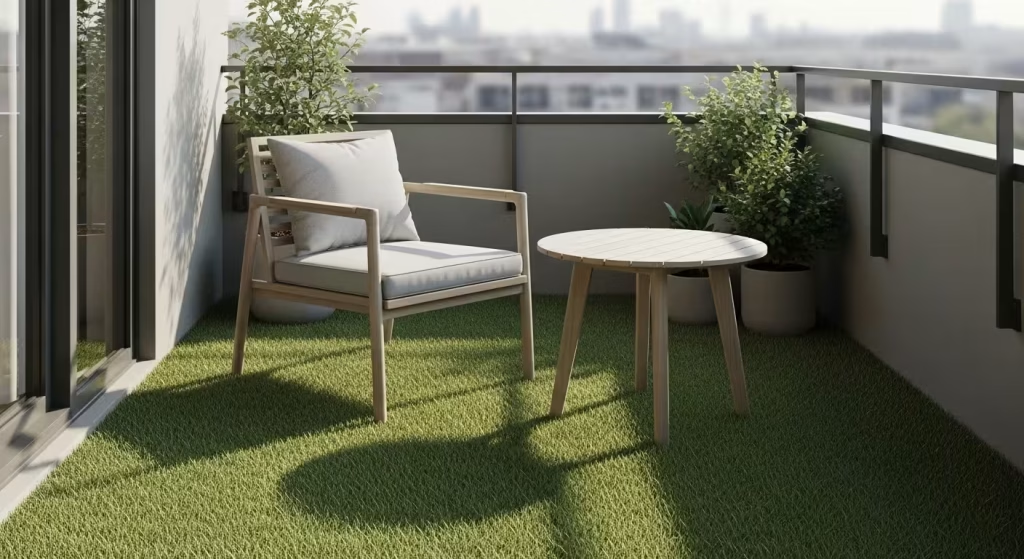
- A small patio or balcony zone
Different uses require different priorities. A decorative area can focus on appearance, while a high‑traffic space needs durability and resilience.
2. Pay Attention to Pile Height and Density
Pile height refers to how tall the grass blades are. While longer blades may look lush, they’re not always the best choice.
- Short to mid pile (25–35mm): Clean, modern look, easier to maintain
- Long pile (40mm+): Softer underfoot but can flatten over time
Density matters just as much. Denser turf stands upright better and looks more natural, especially in smaller or visible areas.
3. Choose a Natural, Varied Color Tone
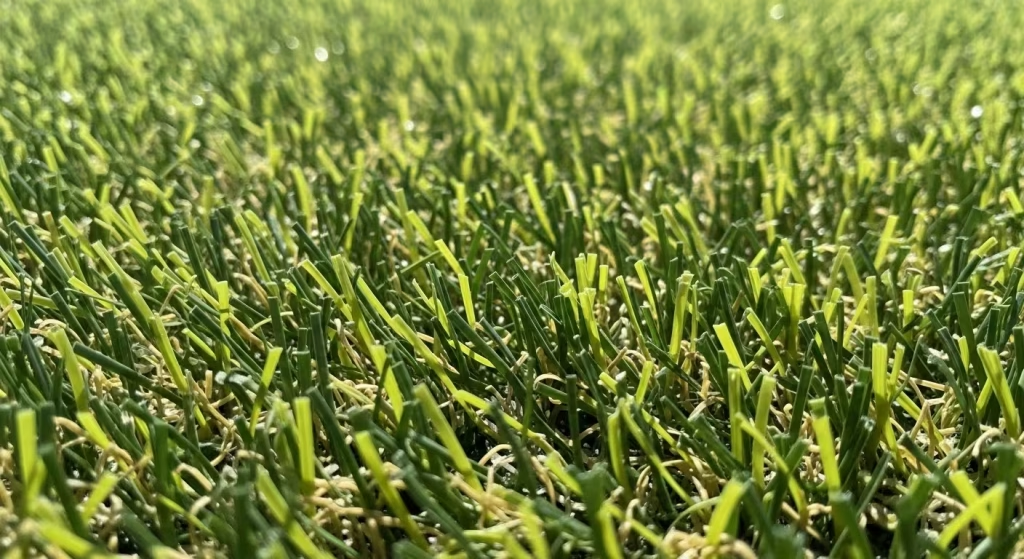
High‑quality artificial turf rarely comes in one flat green shade. Look for subtle variation—olive, muted green, or mixed fibers with hints of brown or beige.
These small color shifts:
- Reduce the plastic look
- Blend better with natural surroundings
- Feel calmer and more realistic over time
For homes that value a soft, natural aesthetic, muted tones usually age better than bright greens.
4. Consider Drainage and Backing Quality
Good drainage is essential, especially in areas that get rain or are used by pets.
What to check:
- Perforated backing for water flow
- Latex or polyurethane backing that feels sturdy
- Flexibility that allows the turf to adapt to uneven surfaces
Poor drainage can lead to odors, pooling, or faster wear. Proper drainage is one of the most important technical factors in artificial turf performance. According to guidance from the U.S. Environmental Protection Agency, drainage and material composition can affect both durability and environmental impact.
5. Think About Comfort Underfoot
If you plan to walk barefoot or sit directly on the turf, softness matters.
- Look for turf with softer blade fibers
- Consider adding an underlay for balconies or patios
- Avoid overly stiff or shiny materials
Comfort often becomes more important than appearance once the turf is part of daily life. Comfort is often one of the most overlooked factors when choosing the right artificial turf for everyday living spaces.
6. Don’t Ignore Climate and Sun Exposure
Sunlight and heat affect artificial turf more than many people expect.
- UV‑resistant turf maintains color longer
- Heat‑reflective materials stay cooler in summer
- Lighter tones may absorb less heat
If the area receives strong sunlight, this step makes a noticeable difference in comfort.
7. Measure Carefully and Plan the Layout
Artificial turf looks best when it feels intentional, not squeezed into leftover space.
- Measure twice before ordering
- Plan seam placement carefully
- Leave clean edges near walls, planters, or paths
Even small outdoor areas benefit from thoughtful layout planning.
How to Measure Artificial Turf Correctly
Measuring artificial turf isn’t just about getting the numbers right — it’s about avoiding awkward seams, wasted material, and a space that feels “patched together.”
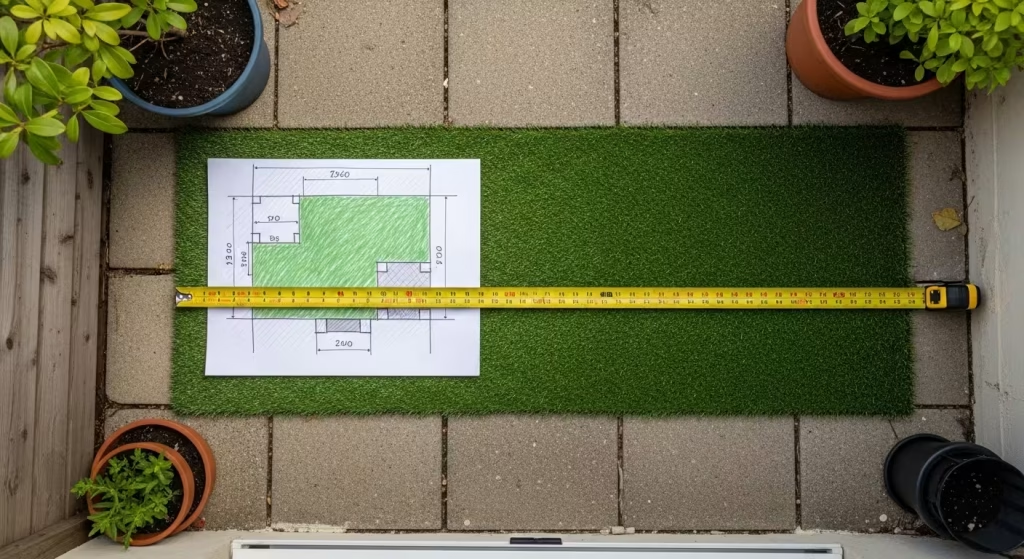
1️⃣ Measure the Full Shape, Not Just Length × Width
Start by measuring the entire usable area, including corners and cut-ins.
- Measure the longest length and widest width
- If the space isn’t a perfect rectangle, sketch it roughly on paper
- Break unusual shapes into simple rectangles or squares, then add them together
This helps you visualize where turf will sit naturally, not just where it technically fits.
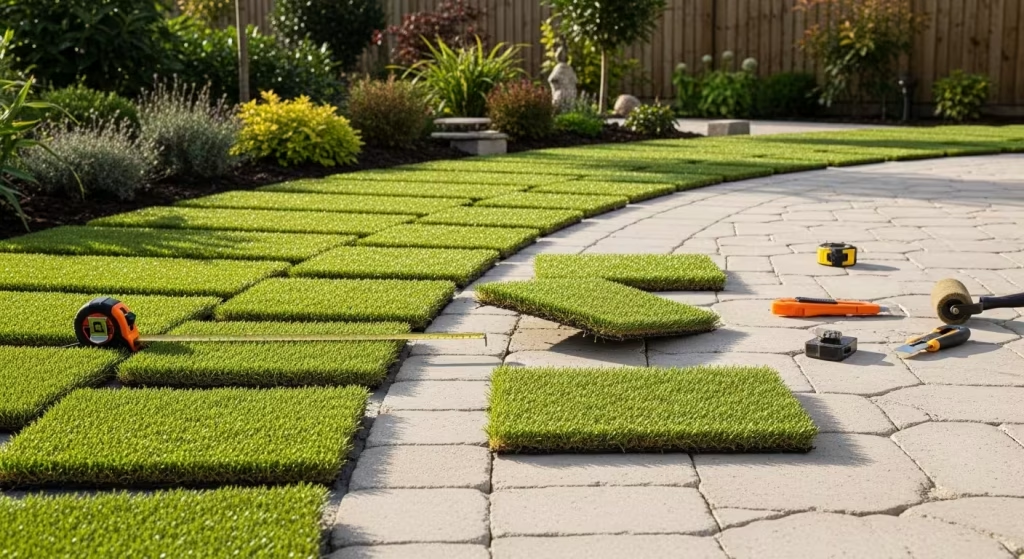
2️⃣ Always Add Extra for Trimming
Artificial turf is trimmed on-site for a clean edge.
Rule of thumb:
- Add 5–10% extra material
- Add more if the area has:
- curves
- angles
- obstacles like planters or posts
This small buffer prevents visible gaps and uneven edges later.
3️⃣ Plan Seam Placement Before Ordering
Seams are where two pieces of turf meet — and they matter more than people expect.
Good seam planning means:
- Placing seams away from main sightlines
- Running turf in one direction so the blades face the same way
- Avoiding seams in the center of small spaces
A well-planned seam is almost invisible. A rushed one is always noticeable.
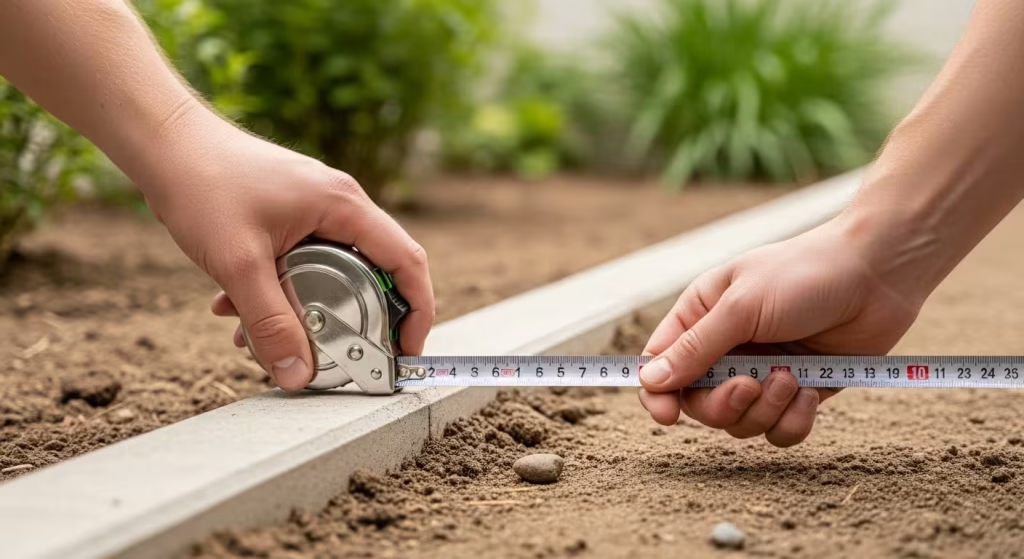
4️⃣ Measure From Solid Edges
Use walls, fences, or hard landscaping as reference points.
- Measure from fixed edges, not grass or soil borders
- Double-check measurements from at least two points
- Measure twice — order once
This ensures clean lines once the turf is installed.
5️⃣ Think Visually, Not Just Numerically
Before finalizing measurements, imagine:
- where furniture will sit
- where people will walk most
- where the turf will be most visible from indoors
Good measuring supports a layout that feels intentional, not leftover.
Common Questions About Artificial Turf
How long does artificial turf last?
High-quality artificial turf typically lasts between 10 and 20 years depending on usage, climate, and installation quality.
Does artificial turf get hot in summer?
Artificial turf can become warm in direct sunlight, but lighter tones, shade, and occasional rinsing with water can help reduce heat buildup.
Final Thoughts
Choosing the right artificial turf may seem like a small decision, but it can quietly shape how you experience your outdoor space every day. When chosen with care, it supports a low‑maintenance lifestyle while still offering a sense of calm and order.
This kind of choice isn’t about following trends—it’s about making your home work better for you.
Sometimes, the most specific decisions are the ones that bring the most lasting comfort. Outdoor surfaces are often planned separately from the rest of the home, but areas near garages, patios, and storage zones benefit from a more integrated approach, as discussed in our guide to making good use of the garage and other outdoor areas.