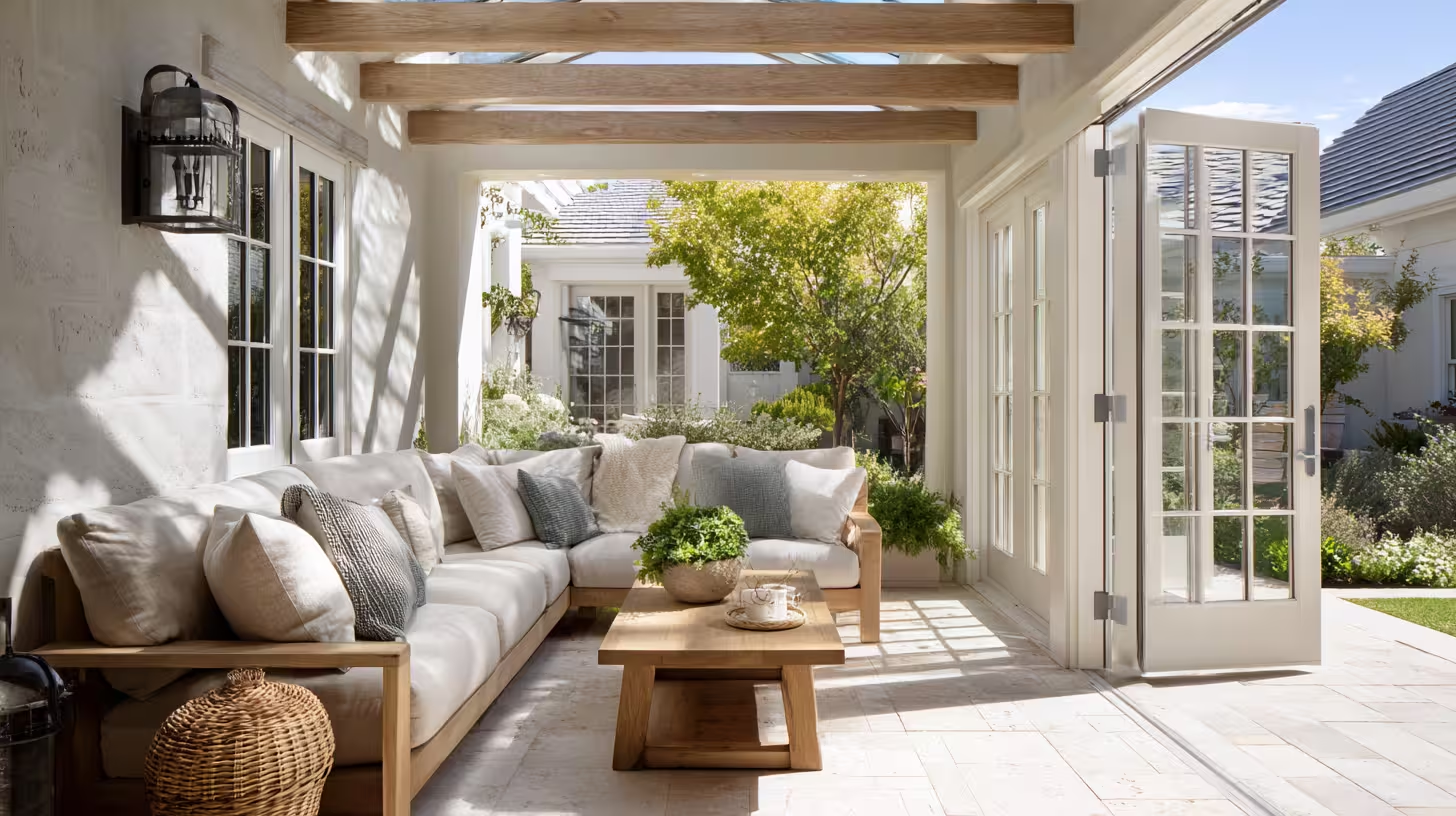
Covered Patio Ideas That Create a Calm Transition Between Indoor and Outdoor Living help homeowners use these flexible spaces intentionally, blending comfort, functionality, and natural flow between indoors and outdoors.
Rather than treating a covered patio as an extension of outdoor décor, it is more useful to approach it as a buffer zone: a space that protects, connects, and softens the boundary between inside and outside.
Why Covered Patios Work as Transitional Indoor-Outdoor Spaces
Unlike open patios or yards, covered patios offer protection from sun, light rain, and falling debris. This makes them usable more consistently throughout the day and across seasons.
They often serve practical roles:
- A pause between interior rooms and the outdoors
- A place to manage dirt, moisture, and temperature change
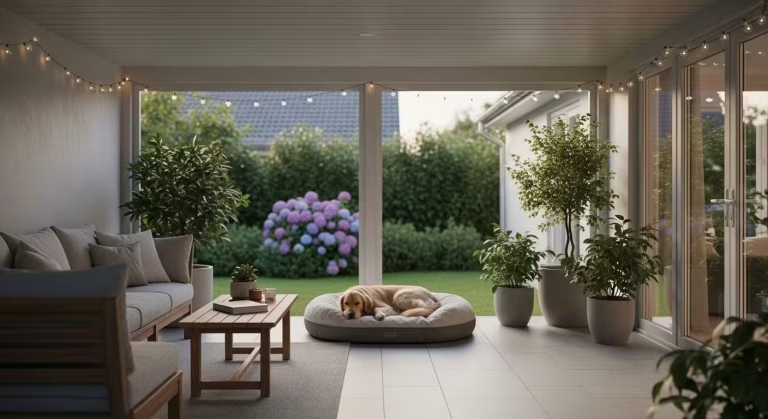
- A safe, shaded area for pets to observe and rest
Because they sit at this threshold, covered patios benefit from interior-level thinking rather than traditional outdoor styling.
Think of a Covered Patio as a Transitional Living Space
The most successful covered patios are treated like rooms without walls. They are designed around movement, comfort, and routine rather than decoration.
Key questions to consider:
- Is this space passed through daily, or lingered in occasionally?
- Does it connect to a kitchen, living room, garage, or garden?
- Who uses it most — adults, children, pets, or all three?
Answering these questions helps define the function before any design decisions are made.
Covered patios function best when they are planned as part of the home’s overall flow, especially in relation to garages, storage areas, and outdoor zones, a relationship explored further in our guide to making good use of the garage and other outdoor areas.
Covered Patio Ideas That Create a Calm Transition: Flooring and Furniture Tips
Flooring is especially important in transitional spaces. Slippery surfaces or materials that retain heat can make covered patios uncomfortable or unsafe, particularly for pets.
Practical flooring considerations include:
- Slip-resistant finishes
- Surfaces that stay cooler under direct sun
- Easy-to-clean materials that tolerate dirt and moisture
Continuity between indoor flooring and the covered patio helps the space feel intentional rather than separate. Check ASTM Outdoor Flooring Safety Guidelines for slip-resistant materials.

Covered Patio Furniture That Supports Everyday Use
Covered patios do not need full outdoor seating sets. Overfurnishing often turns them into cluttered spaces that block movement.
Instead, focus on minimal, supportive pieces:
- One or two comfortable seats
- A bench that doubles as storage
- Open floor space for pets to move freely
Furniture should invite short stays and flexible use, not formal gatherings.
Designing a Pet-Safe Covered Patio
Covered patios are especially valuable for households with dogs or cats. They provide fresh air and visual stimulation without exposing animals to direct hazards.
Design considerations for pet use:
- Shaded areas to prevent overheating
- Secure boundaries to prevent escape
- Durable materials that resist scratching or moisture
This space often becomes a favorite resting spot for pets, particularly during warmer months.
The surface underfoot plays an important role in comfort and safety, particularly for pets, which is why thoughtful ground planning — including turf choices — matters in covered patio design.
Lighting and Plant Ideas for Covered Patio Ideas That Create a Calm Transition
Lighting in covered patios should feel closer to indoor lighting than outdoor floodlights. Soft, indirect light makes the space usable in early mornings and evenings.
Consider:
- Wall-mounted fixtures with warm tones
- Shielded lighting to reduce glare
- Consistent placement that supports movement and safety
Good lighting reinforces the patio’s role as a lived-in space rather than a decorative one. Learn more about designing home lighting for transitional spaces in our Home Lighting Ideas for Indoor-Outdoor Spaces guide.
Keeping a Covered Patio Flexible for Daily Life
Because covered patios sit between worlds, flexibility matters. Avoid fixed installations that limit future use.
Flexible design choices include:
- Moveable seating
- Open layouts
- Minimal permanent fixtures
This allows the space to adapt as routines change — from quiet mornings to active afternoons.
How Covered Patios Connect to the Rest of the Home
Covered patios often link directly to garages, kitchens, or main living areas. When designed thoughtfully, they help manage transitions between storage, outdoor activity, and interior calm.
They work best when considered alongside other functional spaces rather than as isolated outdoor features.
Covered Patio Privacy Ideas Without Closing the Space
Covered patios often benefit from a sense of enclosure, but full walls or heavy screens can defeat their transitional purpose. Privacy here is less about isolation and more about gentle separation.
Thoughtful privacy solutions include:
- Slatted wood screens that filter views without blocking airflow
- Outdoor curtains that can be opened or closed as needed
- Tall planters placed to soften sightlines rather than fully block them
These elements create a feeling of refuge while maintaining a visual and physical connection to the outdoors.
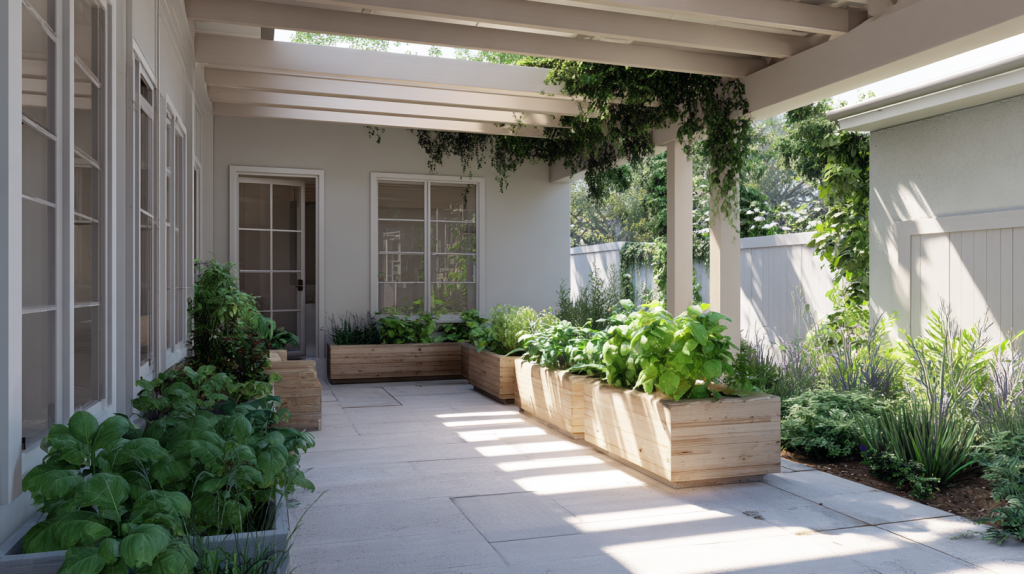
Indoor Gardening and Plant Ideas for Covered Patios
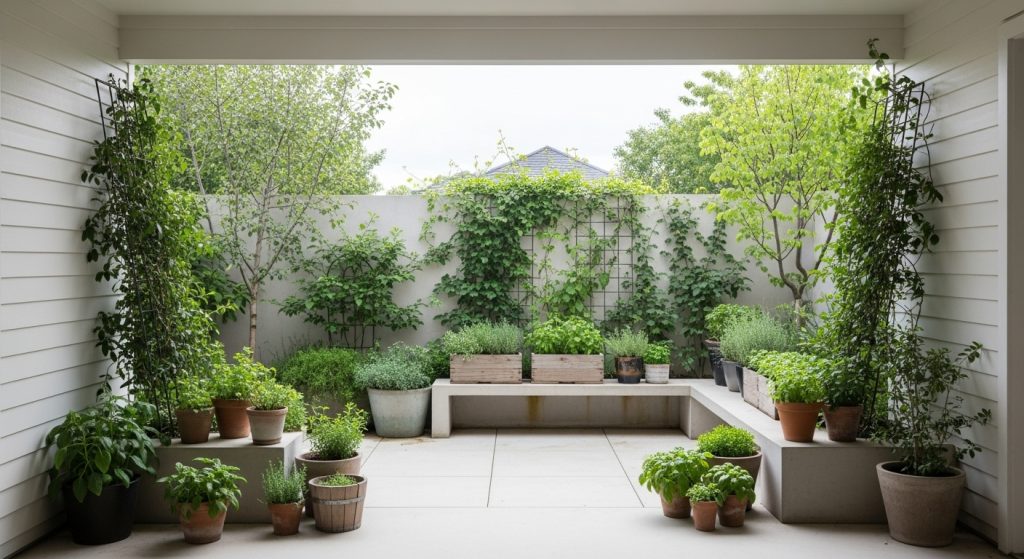
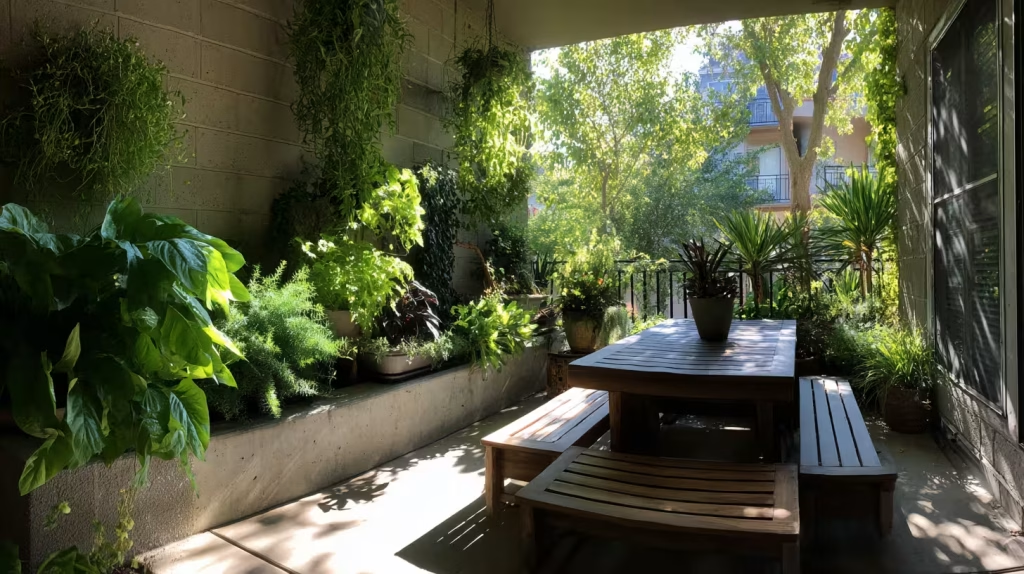
Covered patios are ideal environments for plants that benefit from protection while still enjoying natural light. This makes them well suited for indoor-outdoor gardening that feels intentional rather than decorative.
Consider plants that:
- Thrive in indirect light
- Tolerate temperature fluctuations
- Add softness without demanding constant care
Herbs, shade-tolerant houseplants, and climbing greenery can all work well here. When plants are grouped thoughtfully, they also help regulate temperature and improve the sensory quality of the space. Learn about indoor-outdoor plant care from the Royal Horticultural Society
Rather than scattering pots, treat plants as part of the architecture — defining edges, guiding movement, and reinforcing the patio’s role as a living transition.

Small Cocktail Bar Ideas for Covered Patios
Covered patios naturally lend themselves to slower moments, particularly in the evening. A compact cocktail or beverage area can enhance this without turning the space into an entertainment zone.
Simple approaches work best:
- A narrow console or shelf for glassware
- A small surface for mixing or serving
- Storage that stays closed when not in use
This is not about hosting, but about creating a place for an intentional pause — a drink at sunset or a quiet end to the day.
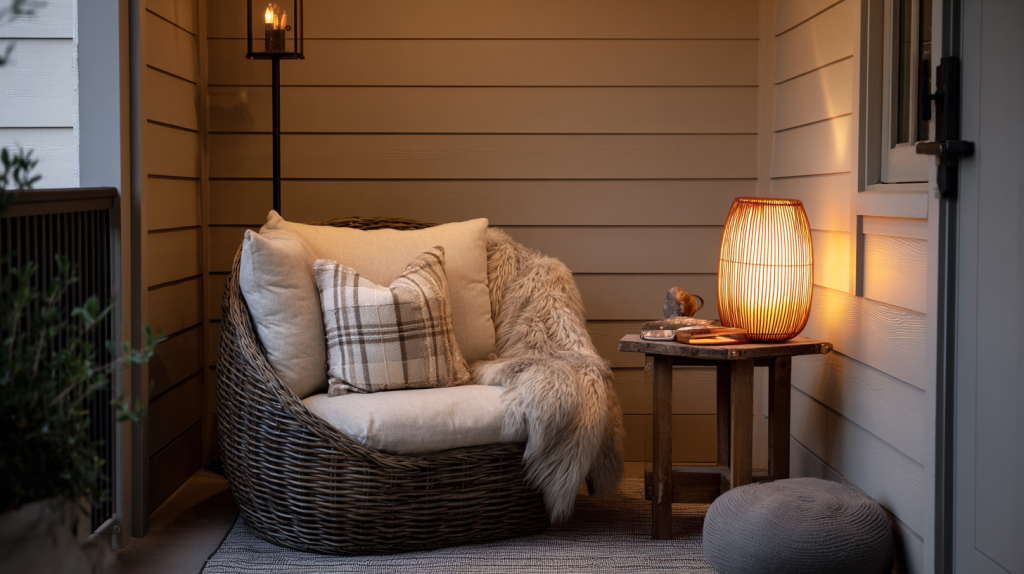
Reading and Quiet Retreat Ideas for Covered Patios
Because covered patios are sheltered yet open, they can become excellent reading or reflection spaces. Unlike interior rooms, they allow for ambient sounds, airflow, and changing light.
To support this use:
- Choose seating that encourages comfort without bulk
- Add soft lighting that supports reading
- Keep surrounding elements minimal to reduce distraction
This kind of setup works especially well for early mornings or late afternoons, when indoor spaces may feel too enclosed.

How to Balance Multiple Uses in a Covered Patio
It is tempting to assign many functions to a covered patio, but restraint remains important. The most successful spaces allow uses to overlap naturally rather than competing for attention.
A bench can support reading, resting, or pet use. Plants can provide privacy and visual calm. A small surface can serve coffee in the morning and drinks in the evening.
When each element serves more than one purpose, the space stays flexible and uncluttered.
A Covered Patio as a Calm Extension of Indoor Living
Covered patios do not need strong visual identities. Their value lies in how they support everyday movement, comfort, and safety.
When treated as transitional spaces — not outdoor showpieces — they become some of the most used and appreciated areas of the home.
In many households, they quietly serve everyone: people, pets, and routines alike.