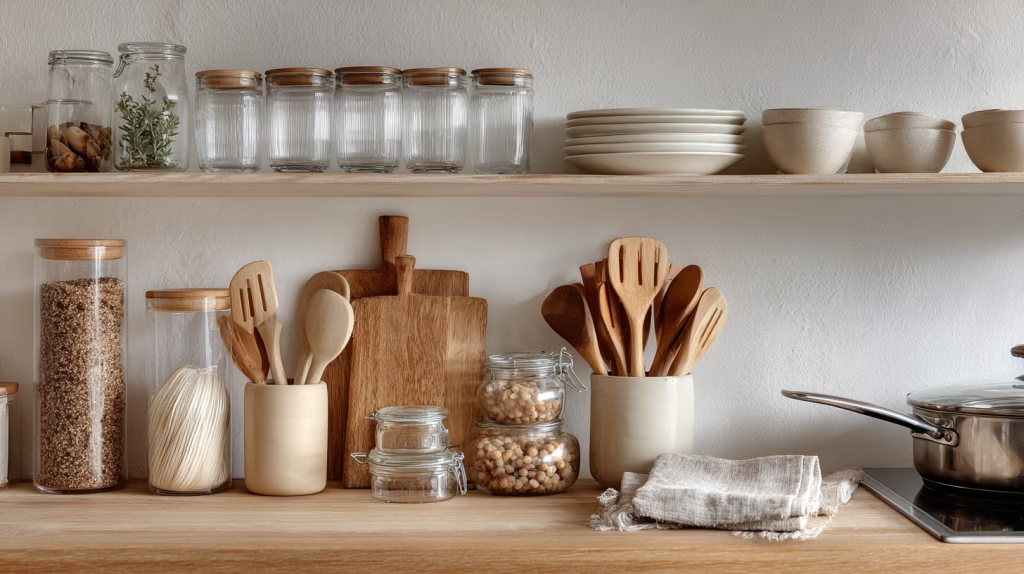
Eco-friendly kitchen items are one of the easiest ways to create a healthier home without completely changing how you cook or live.
A kitchen is one of the most-used spaces in a home, yet it’s also where we’re often exposed to hidden toxins—from plastic containers to harsh cleaning products. Choosing non-toxic and eco-friendly kitchen items isn’t about being perfect or replacing everything at once. It’s about making thoughtful, practical swaps that support daily cooking, long-term health, and a more sustainable home.
In this guide, you’ll find realistic, budget-conscious switches that actually fit into everyday life—especially for small or busy kitchens.
Why Eco-Friendly Kitchen Items Matter for Everyday Cooking
Many common kitchen products contain chemicals that can leach into food or linger in indoor air. Items like plastic food storage, non-stick cookware, and synthetic sponges may seem harmless, but over time they can contribute to unnecessary exposure. Choosing eco-friendly kitchen items helps reduce daily exposure to unnecessary chemicals.
Switching to eco-friendly kitchen items helps:
- Reduce contact with harmful substances
- Improve indoor air quality
- Lower household waste
- Create a calmer, more intentional cooking environment
If you’re already working on making your kitchen more functional, these swaps pair well with smart layouts and storage solutions discussed in our guide on planning a small kitchen layout for daily cooking.
1. Glass, Stainless Steel, and Silicone Food Storage
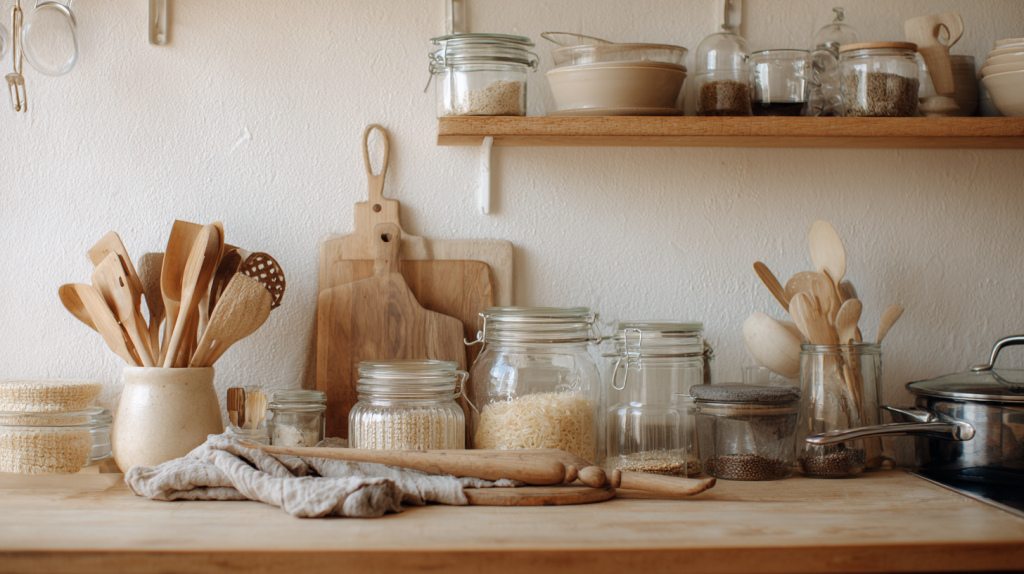
Plastic containers are one of the easiest places to start. Over time, heat and wear can cause plastics to break down, especially when used in microwaves or dishwashers.
Better alternatives include:
- Glass containers with silicone-sealed lids
- Stainless steel lunch boxes
- Platinum-grade silicone bags for snacks or leftovers
These materials are durable, reusable, and don’t absorb odors or stains. Glass containers are especially helpful in small kitchens because they stack neatly and let you see what’s inside, reducing food waste.
According to guidance from the Environmental Working Group, glass and stainless steel are among the safest materials for food contact.
2. Safer Cookware: Cast Iron, Stainless Steel, and Ceramic
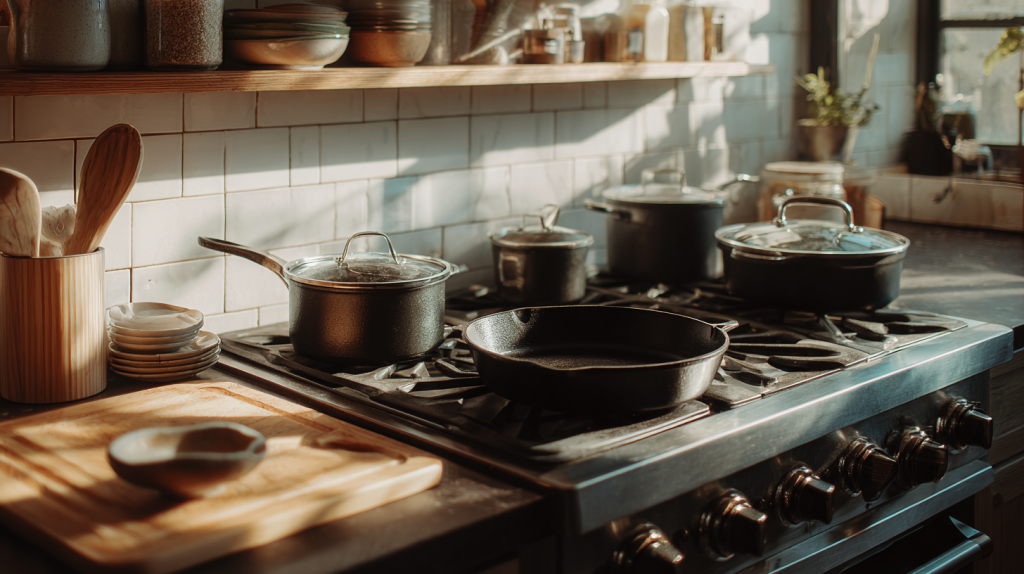
Cookware has a direct impact on what ends up in your food. Traditional non-stick pans can release harmful fumes when overheated and often wear down quickly. According to guidance from the Environmental Working Group, materials like stainless steel and cast iron are considered safer choices for food contact.
Healthier cookware options:
- Cast iron (naturally non-stick when seasoned)
- Stainless steel for everyday cooking
- Ceramic-coated pans made without PFAS
Cast iron is especially versatile—it works on the stove, in the oven, and even for baking. If storage space is limited, choosing a few high-quality pans instead of a full set aligns well with a minimalist, small-space kitchen approach.
Consumer Reports regularly evaluates cookware safety and durability, making it a reliable resource when choosing long-lasting options.
3. Wooden and Bamboo Cooking Utensils
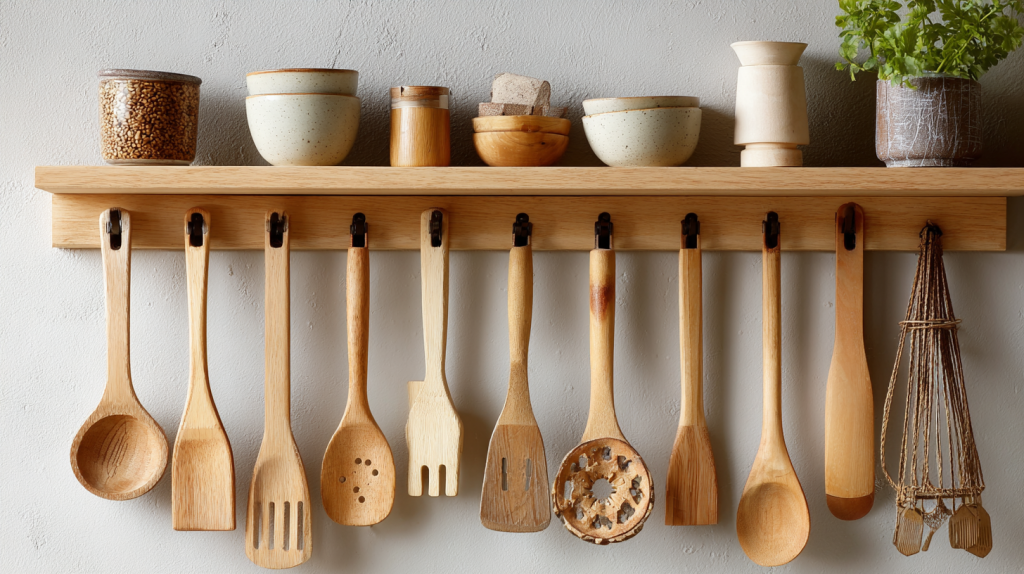
Plastic utensils can melt, scratch cookware, and release microplastics over time. Wooden and bamboo tools are gentle on pans and naturally biodegradable.
Look for:
- Solid wood spoons and spatulas
- Bamboo tongs and turners
- Unfinished or food-safe oil–sealed surfaces
These materials add warmth and texture to your kitchen while staying practical. Hanging a small set on hooks or a rail also supports vertical storage ideas often used in compact kitchens. Many households switch to eco friendly kitchen items to reduce waste and limit daily exposure to unnecessary chemicals.
4. Natural Cleaning Tools and Non-Toxic Dish Care
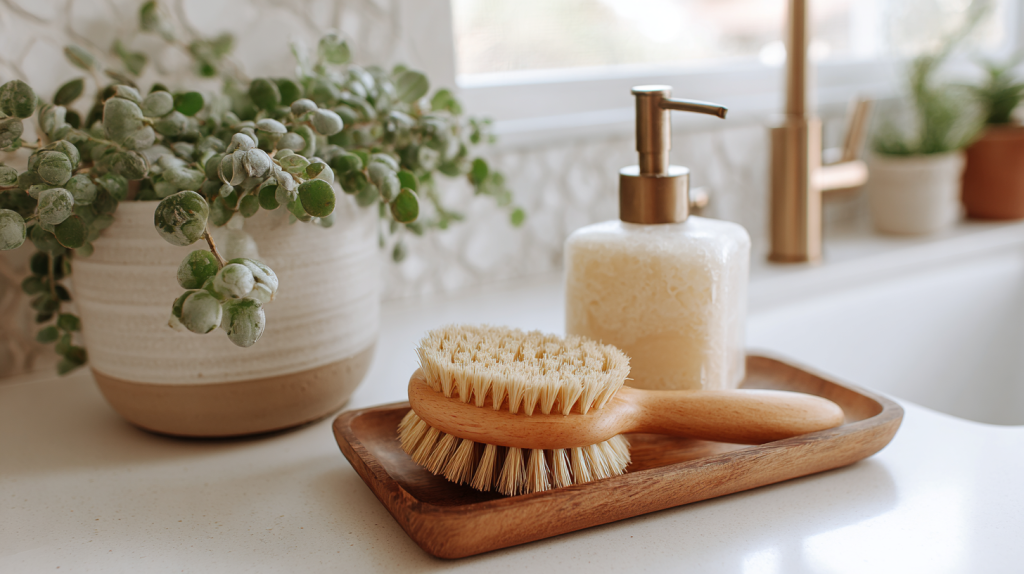
A truly eco-friendly kitchen isn’t just about cooking—it’s also about how you clean. Many conventional sponges and dish soaps contain synthetic fragrances and plastics.
Eco-friendly alternatives include:
- Cellulose or coconut fiber sponges
- Wooden dish brushes with replaceable heads
- Plant-based dish soaps with minimal ingredients
Switching to these reduces plastic waste and keeps harsh chemicals away from food-prep surfaces. For guidance on ingredient transparency, the EPA’s Safer Choice program is a helpful reference.
5. Beeswax Wraps and Reusable Covers
Single-use plastic wrap is convenient but highly wasteful. Beeswax wraps offer a reusable, breathable alternative for covering bowls, wrapping produce, or packing lunches.
They’re especially useful in small kitchens where drawer space is limited—fold flat, store easily, and compost at the end of their life cycle.
For best results, avoid heat and wash with cool water to extend their lifespan.
6. Water Filters Instead of Bottled Water

Bottled water creates unnecessary waste and takes up valuable storage space. A countertop or under-sink water filter reduces plastic use while improving taste and quality.
If you’re working with a compact kitchen layout, slim countertop filters or faucet-mounted options integrate well without cluttering your counters.
Organizations like the Natural Resources Defense Council (NRDC) provide research-backed insights into water quality and filtration benefits.
7. Linen, Cotton, and Reusable Kitchen Textiles
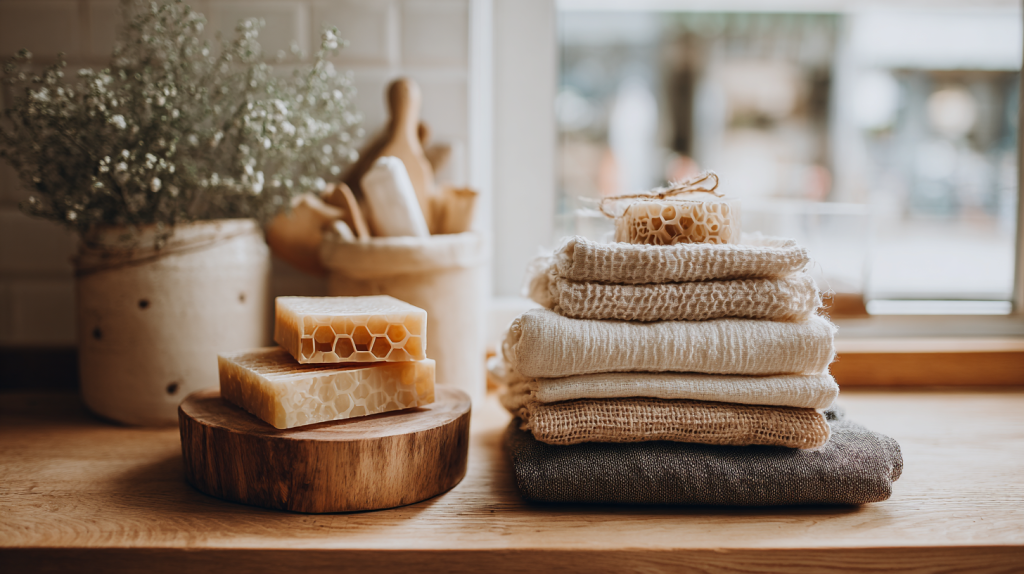
Paper towels and disposable wipes add up quickly. Reusable kitchen textiles are an easy, affordable swap.
Try:
- Organic cotton dishcloths
- Linen tea towels
- Reusable napkins for daily meals
They wash well, last longer, and contribute to a calmer, more intentional kitchen routine—especially when paired with simple storage systems from our home organization tips for clutter-free living post.
How to Transition Without Overwhelm
You don’t need to replace everything at once. A sustainable kitchen is built gradually.
A practical approach:
- Replace items only when they wear out
- Start with daily-use products
- Choose multi-purpose items to save space
If you’re redesigning your space, this pairs well with our guide on planning a small kitchen layout for daily cooking.
This mindset keeps costs manageable and prevents unnecessary waste—an important principle of eco-friendly living. Many people start switching to eco-friendly kitchen items as part of a more intentional lifestyle.
Final Thoughts: A Healthier Kitchen, One Choice at a Time
Creating a non-toxic and eco-friendly kitchen is less about trends and more about thoughtful living. Each small switch supports better health, reduces environmental impact, and makes your kitchen a place that truly works for daily life.
When combined with smart layouts, efficient storage, and intentional design, these changes help build a kitchen that feels calm, functional, and aligned with modern living. Over time, eco-friendly kitchen items support both health and sustainability.
If you’re continuing to refine your space, explore related ideas in our small space living and smart design guides to build a home that feels both beautiful and practical.